


Segonzano
 © Nata Rass | Dreamstime
 © Depositphotos
 © Davide Gardener
 © Shutterstock
 © Shutterstock
Segonzano: vacation between pyramids, castles and sanctuary
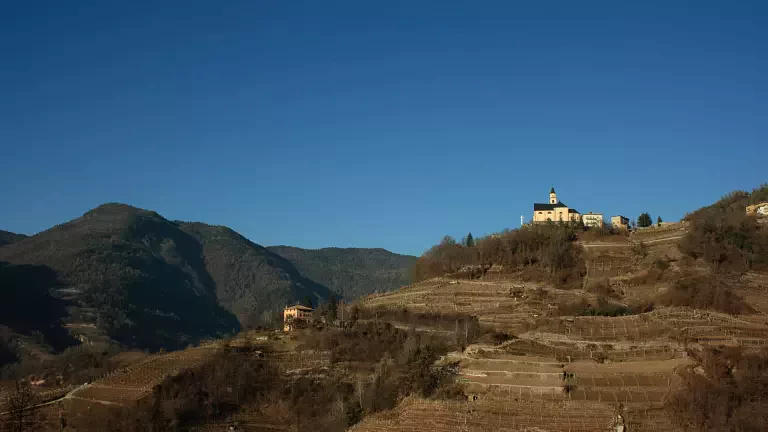
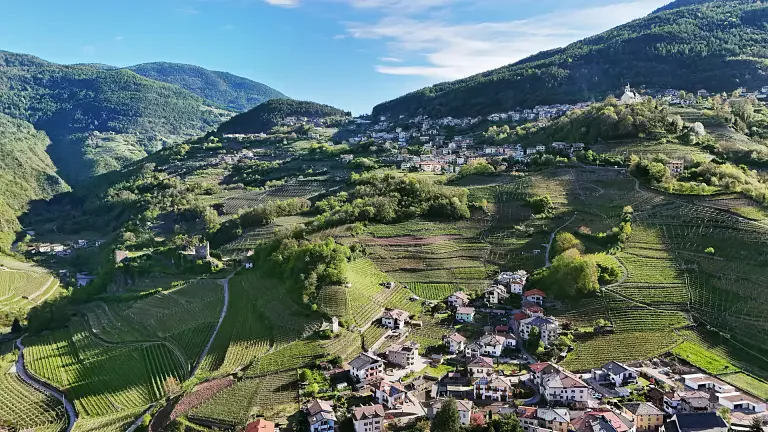
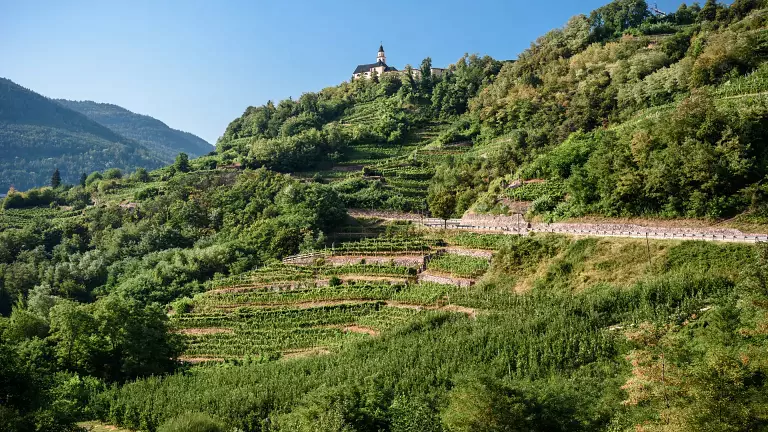
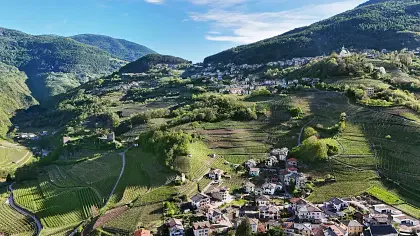
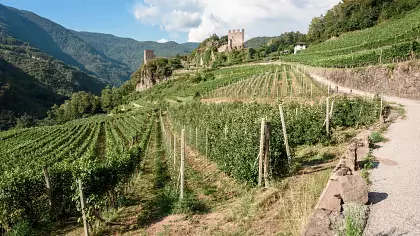
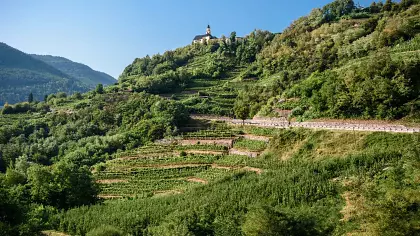
Segonzano is nestled on the slopes of the Segonzano ridge and Ceramont in the Val di Cembra. Made up of 16 scattered hamlets, its name is linked to the Pyramids of Earth of Segonzano, suggestive moraine formations, the Albrecht Dürer trail and the sanctuary of Madonna dell'Aiuto, a destination for cultural and nature tourism. In Segonzano, vines and small fruits are also cultivated.
Pyramids of Earth of Segonzano
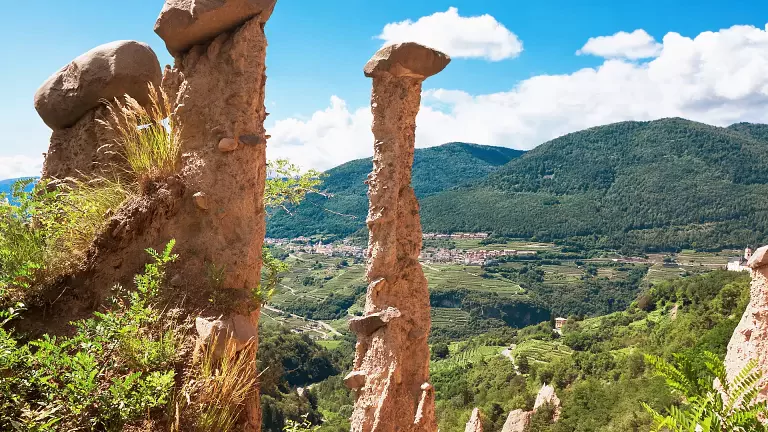
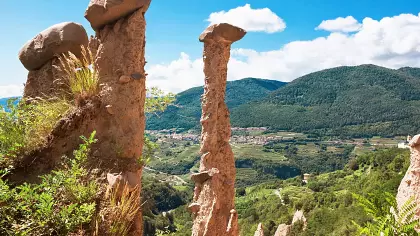
The Pyramids of Earth of Segonzano are a masterpiece of nature: towers, ridges, pinnacles arranged like organ pipes, tall columns topped by a porphyry boulder. Remnants of a moraine deposit dating back to the last glaciation, the Pyramids are today a tourist attraction of high educational value. The site is accessible year-round through a specially equipped and well-marked trail.
The classic form of a pyramid is that of a cone trunk topped by a boulder. Alongside this you can observe pointed pyramids with a conical stem and without the protective boulder: they are, in general, not very tall and this demonstrates rapid evolution. Another typical form is that of a ridge, consisting of a serrated and sharpened blade of earth, the formation of which is due to the thinning of the watershed, between two channels. Sometimes the pyramids are grouped in "organ pipes".
Segonzano and religious tourism
A place of worship and destination for religious tourism. Among the places of religious interest we find: the parish Church of the Trinity of Stedro, the Church of the Immaculate of Piazzo and that of Saint Nicholas of Sevignano. From the hamlet of Sabion starts the road to reach the Sanctuary dedicated to Mary the Helper, known as Madonna dell'Aiuto. Inside it houses a Marian painting to which numerous miracles are attributed.
Segonzano and white wine Müller Thurgau
In the territory of Segonzano, not only small fruits are cultivated, but also grapes from which Müller Thurgau is produced. Also very important is the processing of wood and artistic craftsmanship.
Segonzano: medieval center and the Castle
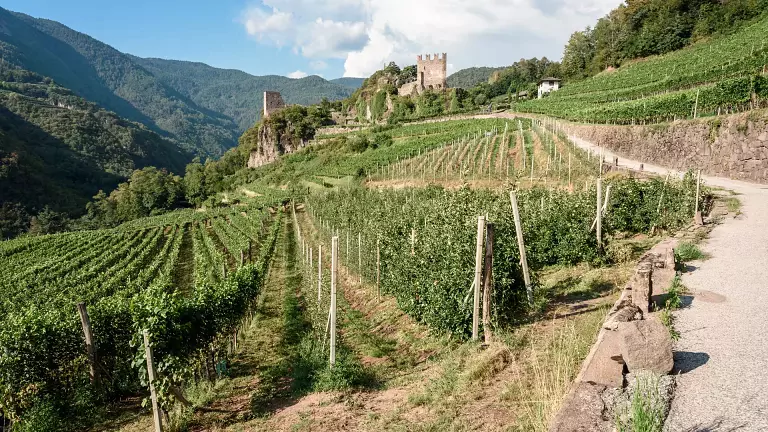
The majestic crenellated ruins of the Castle of Segonzano emerge from a rocky spur that dominates the Valley of Cembra.
Built in the Middle Ages by Rodolfo Scancio on the authorization of the prince-bishop Federico Vanga, this castle served as an important guard over the traffic of the Adige Valley that passed over the Cantilaga bridge on the Avisio stream. Of the thirteenth-century construction and the sixteenth-century remodeling promoted by the A Prato, to whose descendants the castle still belongs, only a few walls remain, but the fortress was very important between the fourteenth and fifteenth centuries.
Over the centuries it was owned, in addition to the Scancio, by the Rottenburg and Greifenstein families in 1300. In 1424 it became property of the Dukes of Tyrol. Bombed and looted during fighting between Austrians and French, in 1795, the fortress was abandoned and fell into ruin. The surviving tower is the Roman one, called the prison tower.
The dark walls of the fortress also impressed Albrecht Dürer, when he passed by during his first trip to Venice in 1494, to the point of inspiring him to dedicate two famous watercolors to it. In 1971 the historic passage of the German artist was commemorated with two porphyry markers placed at Faver and Piazzo di Segonzano, indicating the points from which the painter was inspired to create the two respective views.
Site accessible year-round independently.
Hotel Segonzano

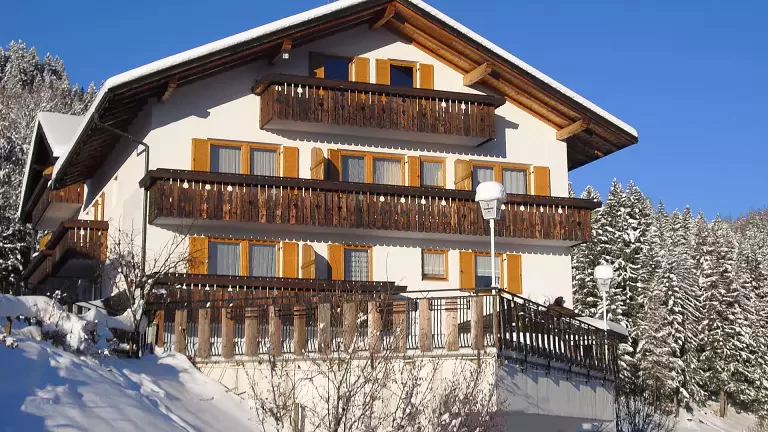
Berggasthof Fichtenhof

From the renovation of an over 300-year-old farmstead, the Fichtenhof guest...
Hotel Langeshof

The Hotel Langeshof is a welcoming hotel in Anterivo, South Tyrol, located...
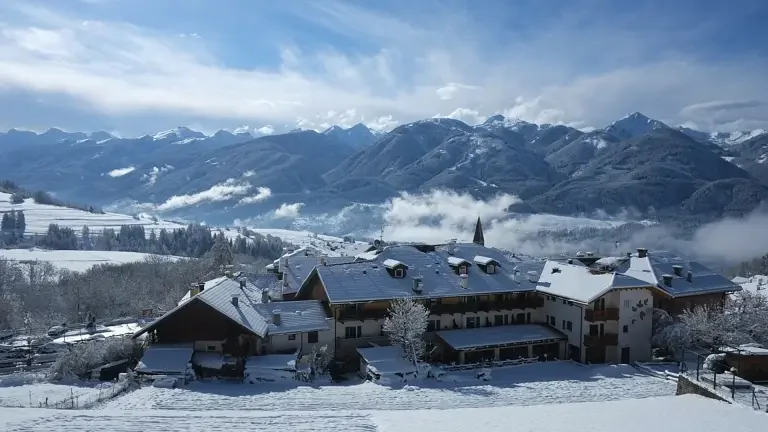
Hotel Alpino
In Varena, a village of Ville di Fiemme, the Hotel Alpino is a family-run h...
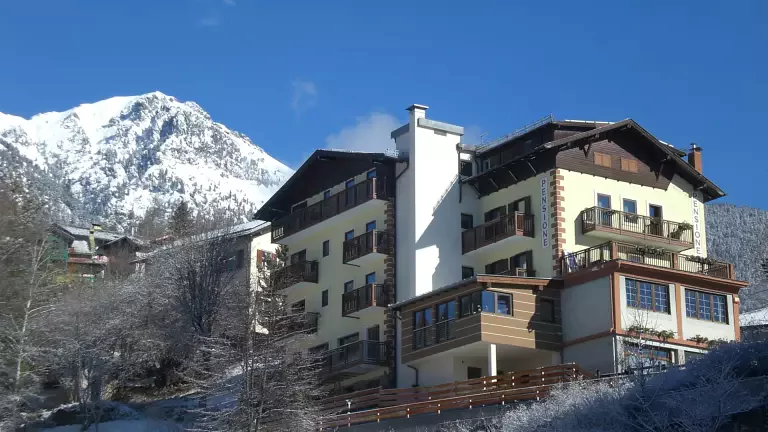
Pensione Serenetta
The Pensione Serenetta is a family-run accommodation located in Varen...
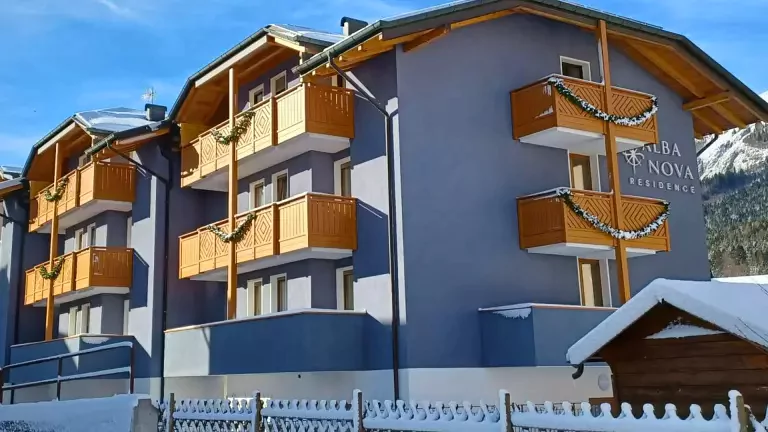
Residence Alba Nova
The apartment hotel Residence Alba Nova is situated in a quiet and central...
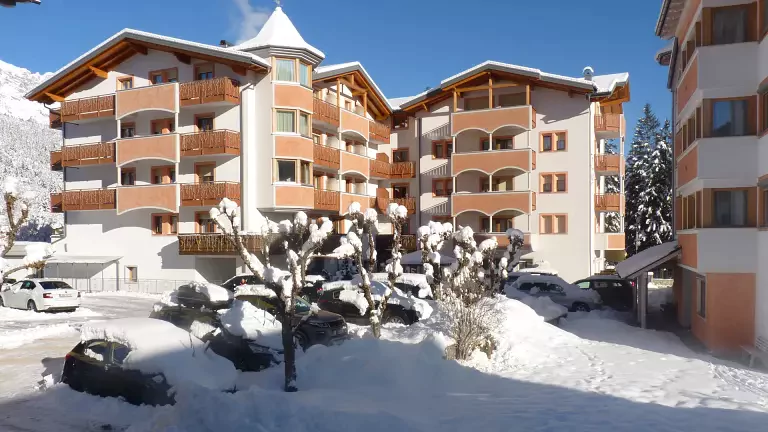
Hotel Select
s
Hotel Select is a welcoming hotel in Andalo, ideally located in a quiet, su...
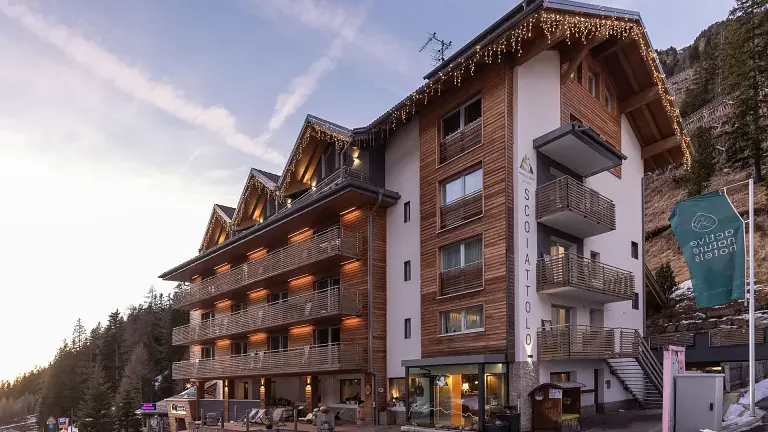
Hotel Scoiattolo
In the heart of the Trentino Dolomites, in Pampeago di Tesero, Hotel Scoiat...
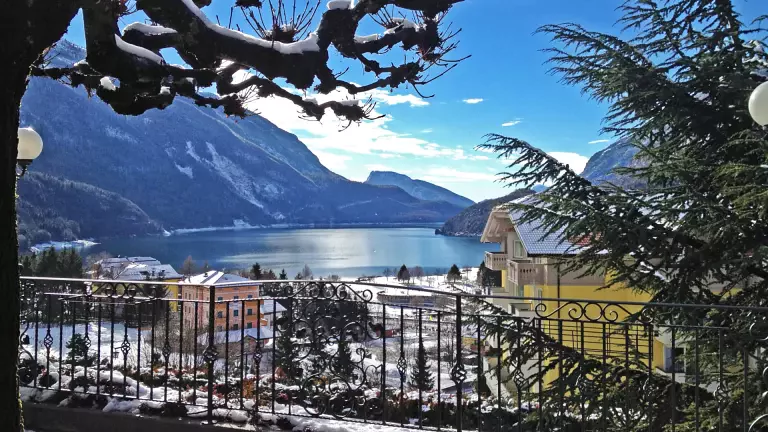
Hotel Miralago
s
Hotel Miralago in Molveno is a cosy hotel in the centre of town and overloo...


