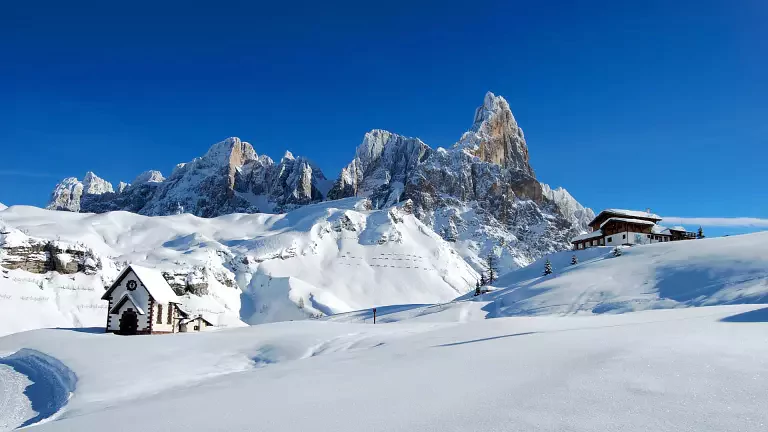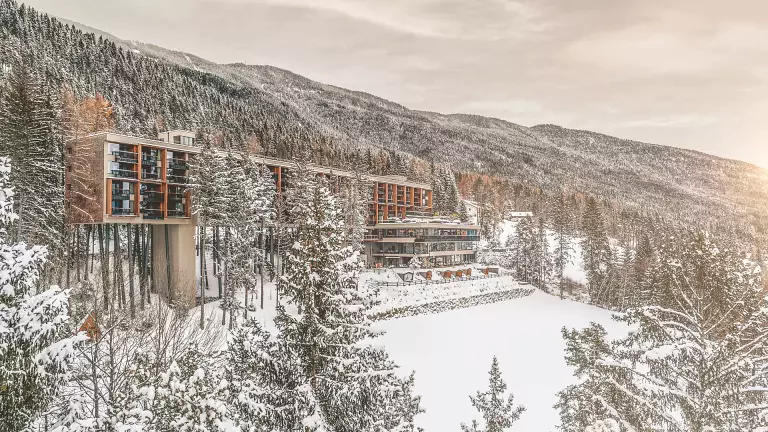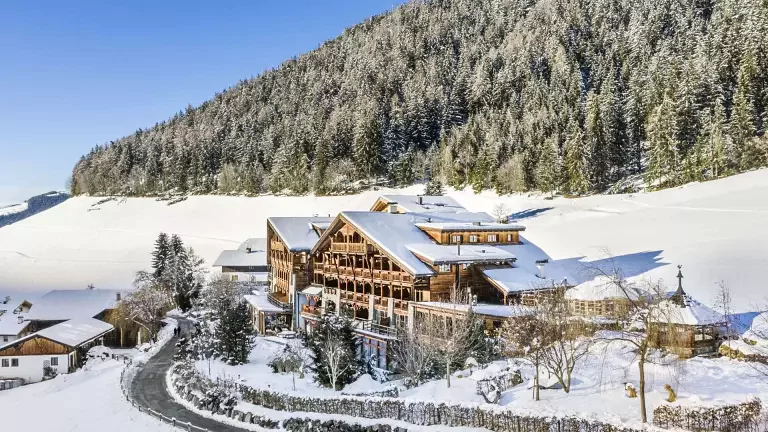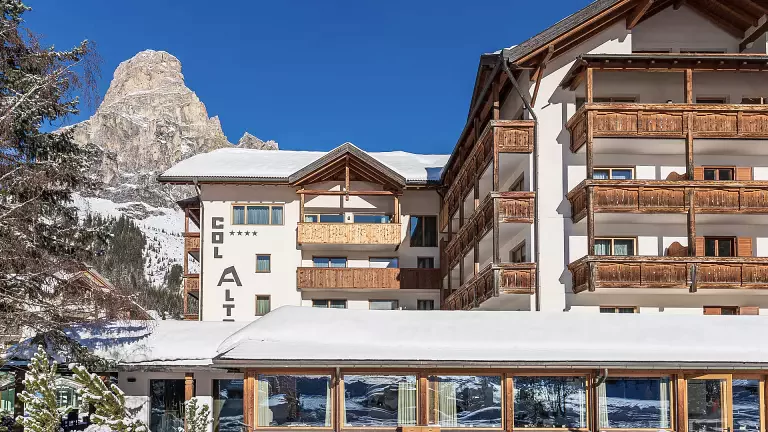
The UNESCO Dolomites are among the most extraordinary mountain landscapes in the world. On 26 June 2009, these magnificent mountains were officially inscribed on the UNESCO World Heritage List, recognising their outstanding universal value from a scenic, geological and geomorphological perspective.
The inscription celebrates not only the breathtaking beauty of the Dolomites but also their exceptional scientific importance. The dolomitic rocks tell a story that stretches back more than 250 million years, when this region was covered by an ancient tropical sea filled with coral reefs.
Today, UNESCO World Heritage status carries an important responsibility: protecting the landscape, preserving biodiversity and promoting increasingly sustainable tourism.
What does UNESCO World Heritage status mean?
The Dolomites have been recognised as a serial natural property, meaning a single World Heritage Site made up of several separate areas that are closely linked by their geological, landscape and natural characteristics.
The nine UNESCO Dolomite Systems are not connected geographically, yet together they represent the finest example of a dolomitic mountain landscape anywhere in the world, featuring:
- spectacular vertical cliffs and dramatic peaks;
- high alpine plateaus;
- distinctive pale-coloured mountains;
- unique geological formations;
- valuable alpine ecosystems.
This serial structure allows the protection of the most representative areas across the entire Dolomite range.
The Dolomites UNESCO Foundation
Following the World Heritage inscription, the institutions involved in the nomination established the Dolomites UNESCO Foundation, officially founded on 13 May 2010.
Its members include:
- Province of Belluno
- Province of Pordenone
- Province of Udine
- Autonomous Province of Bolzano – South Tyrol
- Autonomous Province of Trento
- Veneto Region
- Friuli Venezia Giulia Region
The Foundation coordinates the conservation, management and promotion of the UNESCO World Heritage Site, supporting research projects, environmental education and responsible tourism initiatives.
The 9 UNESCO Dolomite Systems
1. Pelmo – Croda da Lago
The Pelmo – Croda da Lago system covers more than 4,300 hectares in the Province of Belluno.
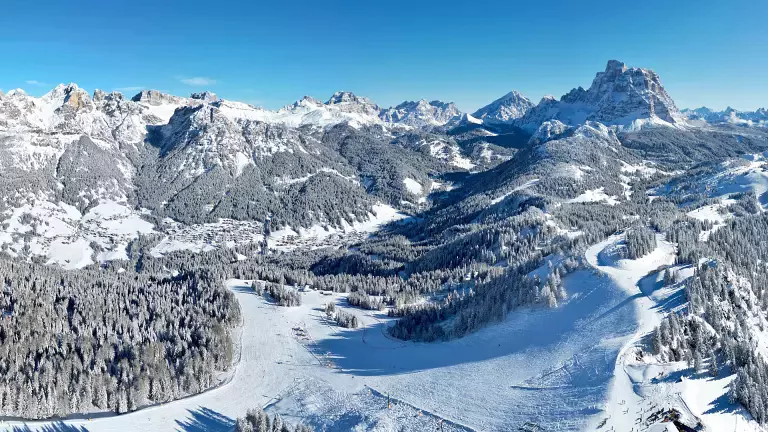
Its undisputed landmark is the majestic Monte Pelmo, affectionately known as Il Caregon del Padreterno ("The Throne of God"), famous for being the first major Dolomite summit successfully climbed by mountaineers in 1857.
Alongside Monte Pelmo rise the elegant peaks of Croda da Lago, the Lastoi de Formin, Monte Cernera, and the beautiful alpine meadows of Mondeval, renowned for the archaeological discovery of the famous Mondeval Man.
This is one of the most captivating areas of the Belluno Dolomites, offering spectacular panoramic hikes and unforgettable trekking routes.
2. Marmolada
At 3,343 metres, Punta Penìa is the highest peak in the Dolomites.
Known as the Queen of the Dolomites, the Marmolada massif stretches across the provinces of Belluno and Trento, covering more than 2,200 hectares.
Home to the largest glacier in the Dolomites, Marmolada offers breathtaking scenery and internationally renowned hiking routes. It is also one of the iconic mountains of Alpine climbing and an important historical site linked to the First World War.
3. Pale di San Martino, San Lucano, Belluno Dolomites and Vette Feltrine
Covering more than 31,000 hectares, this is the second-largest UNESCO Dolomite System.
It includes some of the most spectacular mountain groups in the Dolomites:
- Pale di San Martino
- Pale di San Lucano
- Monte Agner
- Civetta
- Moiazza
- Schiara
- Monti del Sole
- Vette Feltrine
The area encompasses much of the Belluno Dolomites National Park, offering an extraordinary variety of landscapes, from vast rocky plateaus to deep valleys rich in wildlife and biodiversity.
It is one of the finest destinations for hiking, mountaineering and nature lovers seeking authentic alpine environments.
4. Friulian Dolomites and Oltre Piave Dolomites
Stretching across the provinces of Pordenone, Udine and Belluno, this UNESCO system covers more than 21,000 hectares.
The Friulian Dolomites are considered one of the wildest and most unspoilt areas in the entire Dolomite range.
Here, nature takes centre stage. Rugged peaks, remote valleys and scenic hiking trails offer visitors the opportunity to experience untouched mountain landscapes, far from the busiest tourist destinations.
It is the perfect destination for hikers seeking tranquillity, wilderness and an authentic connection with nature.
5. Northern Dolomites
With an area of more than 53,500 hectares, the Northern Dolomites form the largest of the nine UNESCO Dolomite Systems.
This vast area includes some of the most famous mountain groups in the Alps:
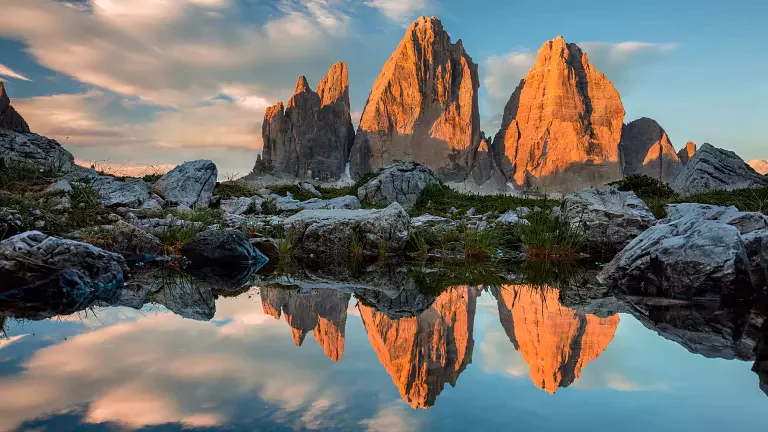
- Tre Cime di Lavaredo
- Sexten Dolomites
- Cadini di Misurina
- Cristallo
- Tofane
- Fanes–Senes–Braies
- Cadore Dolomites
The Northern Dolomites are home to some of the most photographed landscapes in Europe and attract hikers, mountaineers, climbers and photographers from all over the world.
Towering rock formations, alpine lakes and panoramic trails make this one of the most iconic areas of the Dolomites.
6. Puez–Odle
Located entirely in South Tyrol, the Puez–Odle system extends over approximately 7,900 hectares within the Puez–Odle Nature Park.
It is bordered by Val Gardena, Val Badia and Val di Funes.
From a geological perspective, Puez–Odle is one of the most important sites for understanding the formation of the Dolomites. Its exceptionally well-preserved rock layers provide an extraordinary record of millions of years of Earth's geological history.
For geologists, hikers and nature enthusiasts alike, it is one of the most fascinating areas in the UNESCO Dolomites.
7. Schlern – Rosengarten – Latemar
Shared between South Tyrol and Trentino, the Schlern – Rosengarten – Latemar system covers more than 9,300 hectares.
It includes three of the most iconic mountain groups in the Dolomites:
- Schlern
- Rosengarten
- Latemar
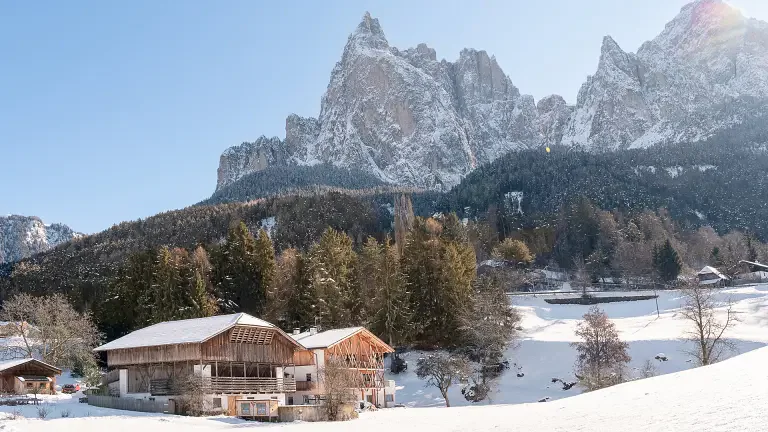
The Schlern is one of South Tyrol's best-known landmarks, while the Rosengarten is famous for the magical phenomenon of Enrosadira, when the pale dolomite cliffs glow in shades of pink and red at sunrise and sunset.
The Latemar is beautifully reflected in the crystal-clear waters of Lake Carezza, one of the most photographed alpine lakes in Europe.
From a geological perspective, the Rosengarten is one of the world's most important sites for studying the fossil coral reefs of the Triassic period and the geological evolution of the Dolomites.
8. Bletterbach
Although covering only 271 hectares, Bletterbach is the smallest of the nine UNESCO Dolomite Systems and one of the most significant from a scientific point of view.
Located entirely in South Tyrol, within the municipality of Aldein, between the hamlet of Radein, Mount Pausabella and Oclini Pass, it is dominated by the distinctive Weißhorn (Corno Bianco), rising to 2,317 metres.
Often referred to as the Grand Canyon of the Dolomites, the Bletterbach Gorge has been carved over thousands of years by flowing water, revealing an extraordinary sequence of rock layers.
Walking through the canyon is like travelling back in time. Visitors can observe rocks that record more than 40 million years of geological history and gain a unique insight into the formation of the Dolomites.
Thanks to its exceptional rock exposures and the numerous fossils discovered here, Bletterbach is regarded as one of Europe's most important geological sites and an internationally recognised destination for researchers, geologists and nature enthusiasts.
9. Brenta Dolomites
Located in western Trentino, the Brenta Dolomites form an isolated dolomite massif, separated from the main Dolomite range.
Covering more than 11,000 hectares, they are characterised by towering rock pinnacles, sheer cliffs and a remarkable network of via ferrata routes.
The mountain group lies within the Adamello Brenta Nature Park, one of Italy's largest protected areas, also renowned for its population of brown bears.
The Brenta Dolomites are among Italy's premier destinations for hiking, climbing and outdoor adventure, combining spectacular scenery with an exceptionally rich natural environment.
Why Visit the UNESCO Dolomites?
Visiting the UNESCO Dolomites means immersing yourself in a natural heritage that is unique anywhere in the world.
In every season, these mountains offer unforgettable experiences:
- panoramic trekking routes;
- hiking excursions in protected natural areas;
- climbing and via ferrata adventures;
- skiing and winter sports;
- nature photography;
- cultural and gastronomic experiences.
From the Tre Cime di Lavaredo to the Marmolada, from Lake Carezza to the Pale di San Martino, every valley preserves spectacular landscapes and authentic traditions.
The Dolomites are not only a destination for outdoor activities but also a place where history, local culture and mountain traditions come together.
UNESCO Dolomites: A Heritage to Protect
UNESCO recognition represents much more than a prestigious international title.
It is an invitation to experience the mountains with respect, choosing responsible tourism that enhances the territory, supports local communities and protects the environment.
The Dolomites are a heritage that belongs to everyone. Preserving them means ensuring that future generations can continue to admire one of the most extraordinary natural landscapes on our planet.
Frequently Asked Questions about the UNESCO Dolomites
When did the Dolomites become a UNESCO World Heritage Site?
The Dolomites were inscribed on the UNESCO World Heritage List on 26 June 2009.
Why are the Dolomites a UNESCO World Heritage Site?
Because of their extraordinary scenic beauty and their exceptional geological and geomorphological value, recognised worldwide.
How many UNESCO Dolomite Systems are there?
There are nine UNESCO Dolomite Systems, distributed across Veneto, Trentino–South Tyrol and Friuli Venezia Giulia.
What is the highest mountain in the UNESCO Dolomites?
The highest summit is Punta Penìa, on the Marmolada, with an altitude of 3,343 metres.
Which is the largest UNESCO Dolomite System?
The Northern Dolomites are the largest system, covering more than 53,500 hectares.