 © Angela Pierdonà
 © Mario Vidor
 © Mario Vidor
 © Stefan Kothner - Raphael Öttl
 © APT San Martino, Passo Rolle, Primiero, Vanoi
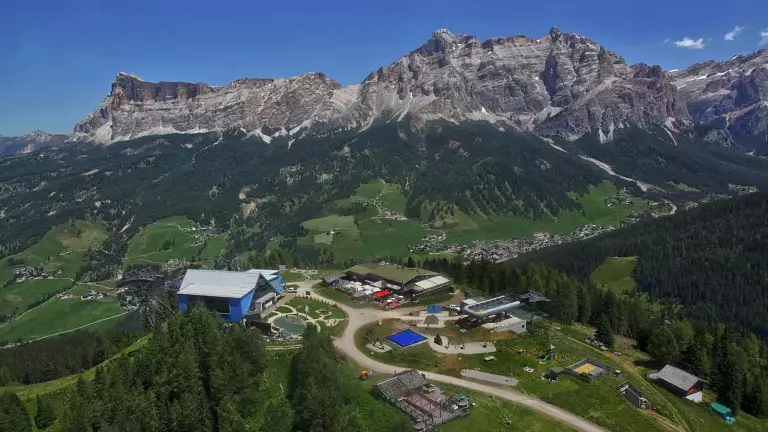
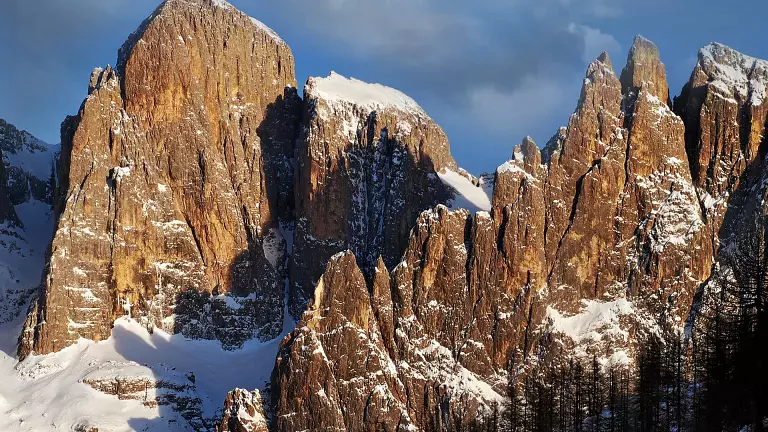
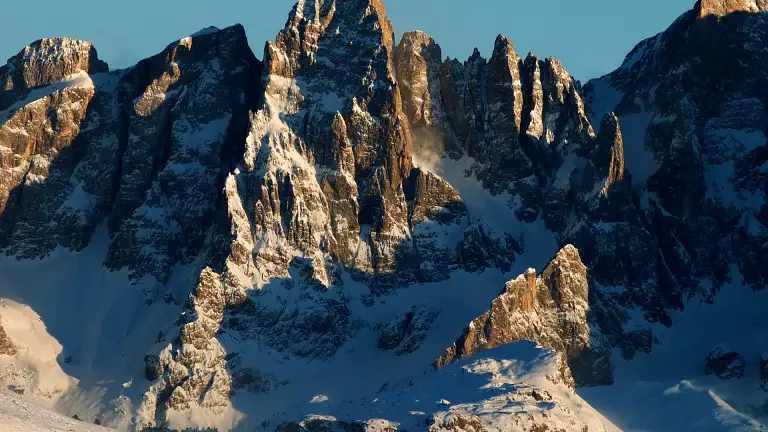
The Pale di San Martino, the largest mountain group in the Dolomites, covers an area of 240 km² between the province of Belluno and Trentino. It encompasses the Agordino, the Valle del Biois, and the Primiero, and is divided into five sectors: northern, San Martino, central, San Lucano, and southern. These spectacular mountains often rise above 3,000 metres, with legendary peaks such as Vezzana (3,192 m), Cimon della Pala, Sass Maor, and Cima della Madonna.
A unique high plateau
In the heart of the range lies the Altopiano delle Pale, a rocky plateau of 50 km² between 2,500 and 2,700 m, featuring almost lunar landscapes and alpine flora rich in edelweiss, gentians, and saxifrages. It’s an extraordinary environment, perfect for lovers of wild and silent mountains.
Geological origins and natural fascination
The Pale di San Martino formed over 300 million years ago as coral reefs in a tropical sea. Through time and weathering, they transformed into the dramatic Dolomite landscapes we admire today. Thanks to their outstanding geological features, the area is part of the UNESCO World Heritage Site.
What to do on the Pale di San Martino: hikes, nature, and adventure
Paneveggio – Pale di San Martino Nature Park
The Pale di San Martino are part of the Paneveggio – Pale di San Martino Nature Park, one of the most evocative protected areas in Trentino, ideal for lovers of trekking, nature, and landscape photography.
Hikes for all levels
There are easy trails, scenic hikes, and more demanding routes for experienced hikers. Among the most loved hikes are:
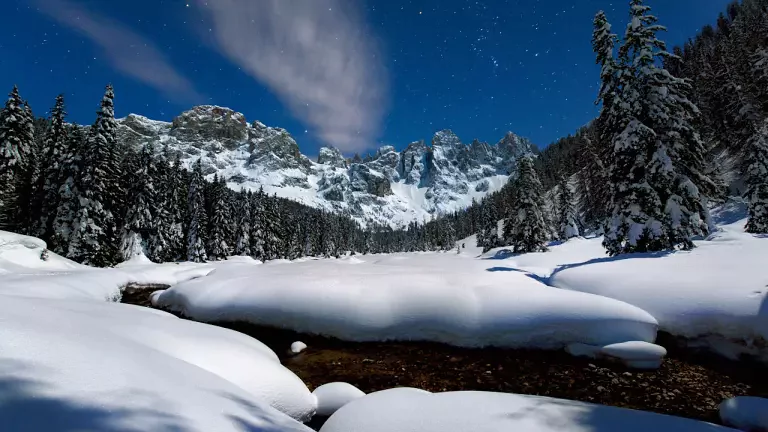
- Val Venegia: one of the most picturesque valleys, ideal for gentle walks among green pastures, crystal-clear streams, and the majestic walls of the Pale.
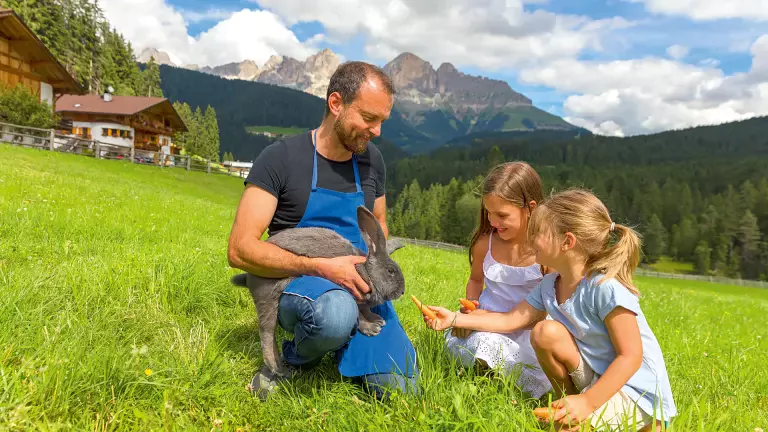
- Sentiero Marciò: in the Foresta dei Violini, a didactic trail on wooden walkways and footbridges, perfect for families and children.
- Laghetti di Colbricon: two small alpine lakes reachable by an easy walk from Passo Rolle, framed by woods and spectacular views.
- Cristo Pensante on Monte Castellazzo: a symbolic and panoramic hike from Passo Rolle leading to a stone statue overlooking the Pale di San Martino—perfect for those seeking reflection in nature.
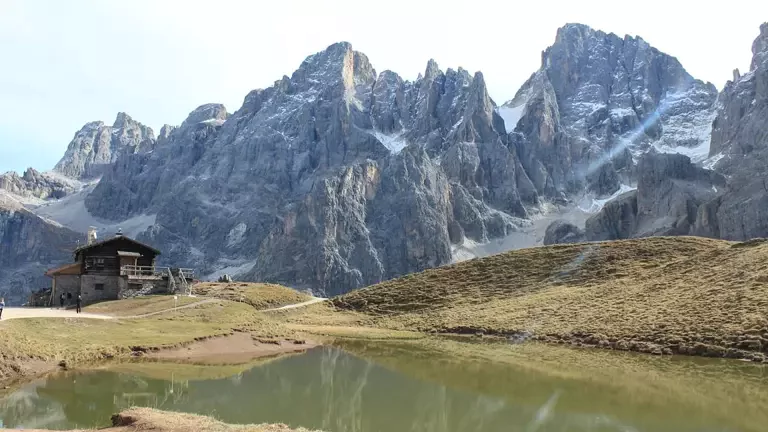
- Baita Segantini: one of the most photographed spots in the Dolomites, reachable from Capanna Cervino or Passo Rolle. The sunset over Cimon della Pala reflected in the tarn is an unforgettable spectacle.
- Altopiano delle Pale: accessible via cable car from San Martino di Castrozza, this vast rocky plateau between 2,500 and 2,700 m invites exploration through circular hikes, passing by huts and lunar panoramas.
Mountaineering and via ferratas
The Pale di San Martino are a historic destination for Dolomite alpinism, frequented since the 19th century. Famous via ferratas include:
Bolver-Lugli via ferrata, leading to the Cimon della Pala summit (3,184 m), also known as the “Matterhorn of the Dolomites.”
Classic routes like the Solleder Route, the Spigolo del Velo, or the Buhl Route for experienced climbers.
Winter on the Pale: snowy landscapes and sports
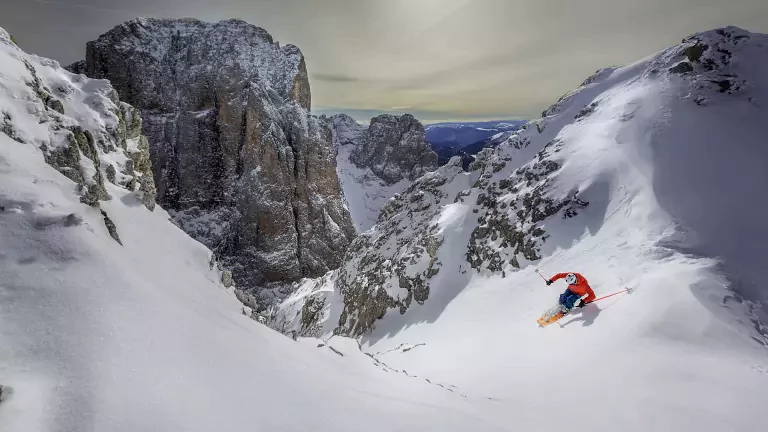
In winter, the Pale di San Martino become a paradise for winter sports and outdoor snow activities.
The ski area San Martino di Castrozza – Passo Rolle, part of the Dolomiti Superski network, offers panoramic slopes for skiers of all levels.
Snowboard enthusiasts can enjoy the San Martino Snowpark and the Rolle Railz Park.
For those looking for something different: snowshoe hikes, ice climbing, guided tours, and horse-drawn sleigh rides.
Why choose the Pale di San Martino
- Breathtaking panoramas and pristine environments in every season
- Hiking trails for all skill levels, from beginners to expert
- Mountain huts and high-altitude services for an authentic experience
- Rich alpine history and cultural heritage among the most significant in the Dolomites
- Ideal in summer for trekking and in winter for skiing and winter activities
Mountain Huts on the Pale di San Martino: High-Altitude Hospitality
Amidst spectacular views and hiking trails for all levels, the Pale di San Martino offer a network of alpine huts, perfect for a break, a traditional mountain meal, or an overnight stay at high altitude. Accessible on foot or via cable cars, these huts are excellent starting points for hikes, via ferratas, and multi-day treks.
- Rifugio Pedrotti alla Rosetta (2581 m) – Located on the Pale Plateau in the central sector, easily reached from San Martino di Castrozza via the Colverde – Rosetta cable car.
- Rifugio Velo della Madonna (2358 m) – In the central sector, at the foot of Cima della Madonna, it's an ideal base for climbers and via ferrata enthusiasts.
- Rifugio Volpi al Mulaz (2571 m) – Positioned in the northern sector, between Cima del Focobon and Passo delle Farangole, it offers a strategic point for panoramic crossings.
- Rifugio Pradidali (2278 m) – In the scenic Val Pradidali, it’s one of the most popular and historic huts in the group, set in a majestic alpine amphitheatre.
- Rifugio Capanna Cervino (2084 m) – Located above Passo Rolle, near the Laghetti di Colbricon, it's easily accessible and offers stunning views of Cimon della Pala.
- Rifugio Canali-Treviso (1631 m) – Nestled in the upper Val Canali, perfect for forest hikes and approaching the wilder Dolomite walls.
- Rifugio Scarpa-Gurekian (1735 m) – At the foot of Monte Agnèr, this hut is a key base for technical ascents and peaceful hikes in the southern sector.
- Baita Segantini (2200 m) – Just a few minutes from Passo Rolle, this is one of the most beloved and photographed spots in the Dolomites, thanks to the breathtaking view of Cimon della Pala reflected in the alpine lake.