 © Picography
 © DOLOMITES Val Gardena
 © Shutterstock
 © Depositphotos
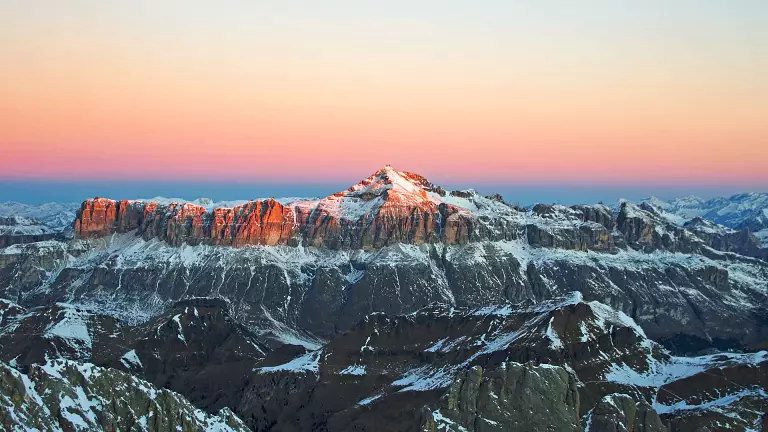
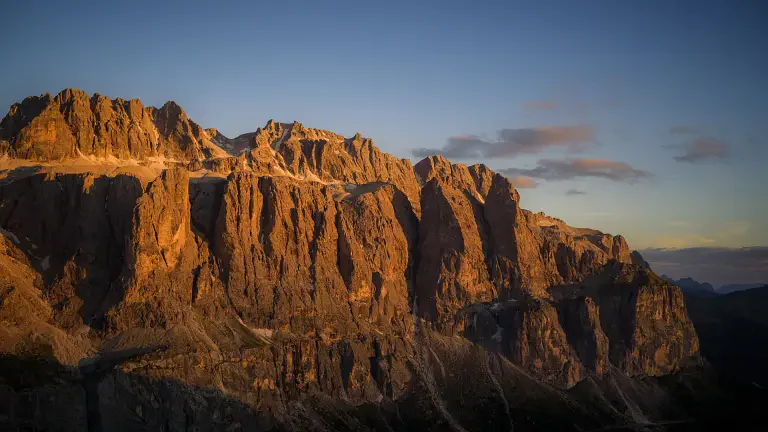
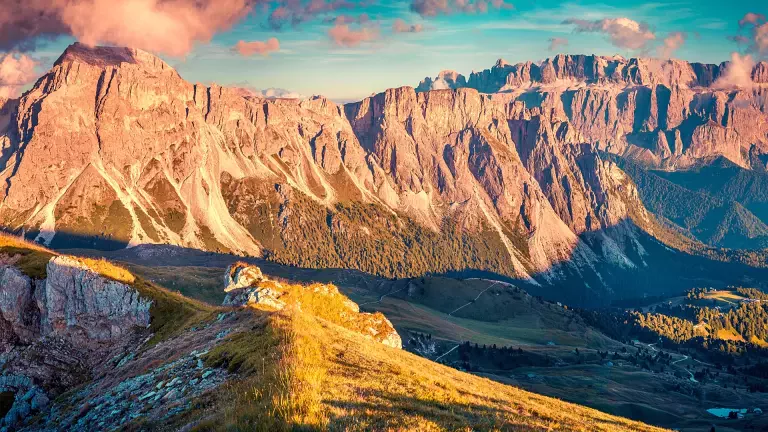
The Enrosadira of the Dolomites is a natural phenomenon that, at sunrise and sunset, turns the mountain walls pink, orange and red. It is one of the most distinctive features of the Dolomite landscape and can be admired in many of the region’s main valleys.
The term comes from the Ladin word enrosadìra, associated with the idea of “turning pink”. The colour of the mountains changes rapidly depending on the light, atmosphere, season and orientation of the rock faces, making every sunrise and sunset different.
What is the Enrosadira?
The Enrosadira is an optical phenomenon caused by sunlight. When the Sun is close to the horizon, at sunrise or sunset, its light travels through a longer path in the atmosphere and takes on warmer tones.
This light reaches the walls of the Dolomites, creating the characteristic shades of pink, red, orange and gold.
The presence of dolomite in the rock contributes to the particular appearance of the phenomenon, but the colours we see mainly result from the interaction between sunlight, atmosphere, weather conditions and the characteristics of the rock faces.
This is why no two Enrosadira sunsets are ever exactly the same.
Why do the Dolomites turn pink?
The colour of the mountains mainly depends on:
- the position of the Sun, particularly when it is low on the horizon;
- light scattering in the atmosphere, which enhances warm colours;
- the composition and colour of the Dolomite rock;
- the orientation of the mountain faces in relation to the sunlight;
- clouds and weather conditions, which can intensify or soften the colours.
The pink colour may last only a few minutes before quickly changing to orange, red or purple.
When can you see the Enrosadira?
The best moments are naturally sunrise and sunset, although the exact time changes throughout the year.
Enrosadira at sunrise
Sunrise is particularly interesting for mountains with east-facing slopes. It is the ideal time to watch the first rays of sunlight gradually illuminate the peaks.
Enrosadira at sunset
Sunset is generally easier to experience, especially for visitors who do not want to hike during the night. West-facing mountain walls can take on intense colours before gradually disappearing into the shade.
Tip: arrive at your viewpoint at least 20–30 minutes before the expected sunrise or sunset. The colours can appear and change very quickly.
Where to see the Enrosadira in the Dolomites
There is no single best viewpoint. The phenomenon can be seen throughout the Dolomites, but some landscapes are particularly spectacular.
1. Rosengarten and Vajolet Towers – Val di Fassa
The Rosengarten (Catinaccio) is one of the mountains most closely associated with the Enrosadira.
From Val di Fassa, particularly around Vigo di Fassa and Ciampedie, its peaks can turn pink and red during the evening.
The Vajolet Towers add some of the most spectacular rock formations in the Dolomites to the panorama.
2. Langkofel and Sella Group – Val Gardena
Val Gardena offers some of the most iconic views in the Dolomites.
The Langkofel and Plattkofel, visible from Santa Cristina, Monte Pana and other viewpoints in the valley, create particularly striking silhouettes at sunset.
The Sella Group is also a major protagonist of the Enrosadira, especially in views towards the massif and from Gardena Pass.
3. Odle Group and Seceda – Val Gardena and Val di Funes
The Odle Group is one of the most recognisable mountain groups in the Dolomites.
From Seceda, above Ortisei, the characteristic peaks can be admired against a landscape of alpine meadows and pastures.
Another unmissable panorama is the view of the Odle Group from Val di Funes, particularly around Santa Maddalena. The rocky peaks rising above the meadows create one of the most photographed landscapes in the Dolomites.
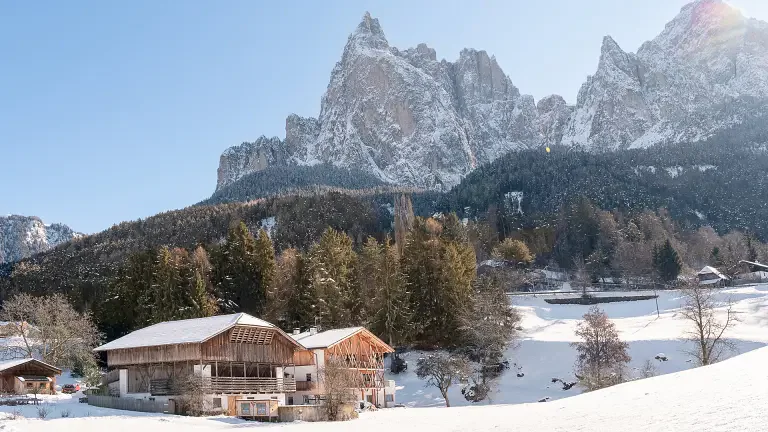
4. Schlern and Langkofel – Alpe di Siusi
The Alpe di Siusi (Seiser Alm) is one of the best places to combine the Enrosadira with a wide alpine landscape.
From the vast plateau, you can see the Schlern, Langkofel and Plattkofel. At sunset, the coloured mountains contrast beautifully with the meadows of the Seiser Alm.
5. Marmolada – Val di Fassa
Marmolada, known as the “Queen of the Dolomites”, offers one of the most impressive mountain landscapes.
The contrast between the massive rock faces, snow and ice can become particularly spectacular when the sunset light takes on warm tones.
Marmolada can be viewed from several viewpoints in Val di Fassa and from the surrounding mountain passes.
6. Pale di San Martino – Rolle Pass
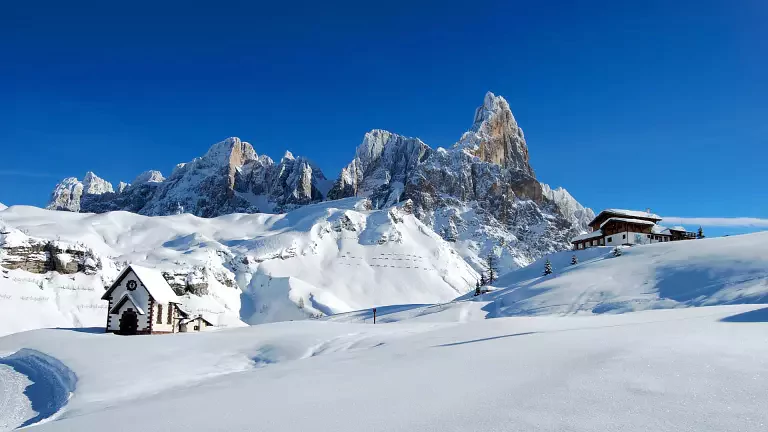
From Rolle Pass, the Cimon della Pala offers one of the most famous views in the Dolomites.
Its distinctive silhouette, often known as the “Matterhorn of the Dolomites”, takes on pink and orange tones when illuminated by the evening sun.
The area around San Martino di Castrozza also offers numerous viewpoints over the Pale di San Martino.
7. Tofane and Cinque Torri – Cortina d’Ampezzo
The valley of Cortina d’Ampezzo is surrounded by some of the most spectacular mountains in the Dolomites.
The Tofane can take on intense colours at sunset, while the Cinque Torri provide a particularly striking subject for photography thanks to their distinctive rock formations.
8. Tre Cime and Cadini – Misurina
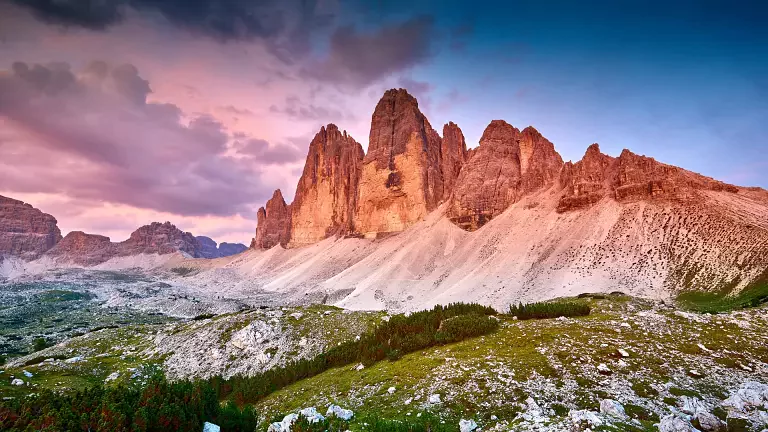
The Tre Cime di Lavaredo (Three Peaks of Lavaredo) are one of the symbols of the Dolomites and, at sunset, their rock faces can take on golden, pink and red tones.
In the same area, the Cadini di Misurina offer a completely different landscape, with jagged rock peaks rising above the scenery around Lake Misurina.
The Enrosadira and Ladin culture
The term enrosadìra belongs to the Ladin language and culture of the Dolomites.
The most famous connection is with the Rosengarten, or “rose garden”. According to the Ladin legend of King Laurin, the massif was once his rose garden.
The legend therefore provides a traditional explanation for the characteristic pink colour that surrounds the mountains at sunset.
FAQ about the Enrosadira of the Dolomites
What is the Enrosadira?
The Enrosadira is the phenomenon that causes the mountains of the Dolomites to take on pink, orange and red colours, particularly at sunrise and sunset.
Why do the Dolomites turn pink?
The phenomenon is mainly caused by sunlight when the Sun is close to the horizon, together with atmospheric light scattering, weather conditions and the characteristics of the Dolomite rock.
Where can you see the Enrosadira?
Some of the best-known landscapes include Rosengarten, Val Gardena, the Odle Group, Alpe di Siusi, Marmolada, Pale di San Martino, Cortina d’Ampezzo and the Tre Cime di Lavaredo.
Is the Enrosadira better at sunrise or sunset?
It depends on the orientation of the mountains. East-facing slopes are generally more favourable at sunrise, while west-facing slopes can be spectacular at sunset.
What is the best time of year to see the Enrosadira?
The Enrosadira can occur throughout the year. However, the position of the Sun, the times of day and the lighting conditions change with the seasons, making each period different.
The Enrosadira: the most magical moment in the Dolomites
Watching the Enrosadira means witnessing a landscape change in just a few minutes: the walls of the Dolomites go from the grey of bare rock to shades of pink, orange and red before gradually returning to shadow.
From Rosengarten to Langkofel, from the Odle Group to the Pale di San Martino, from Marmolada to the Tofane and Tre Cime, every valley offers a different perspective on this natural spectacle.
The Enrosadira is therefore more than just a colour: it is one of the most evocative ways to experience and appreciate the landscape of the Dolomites.