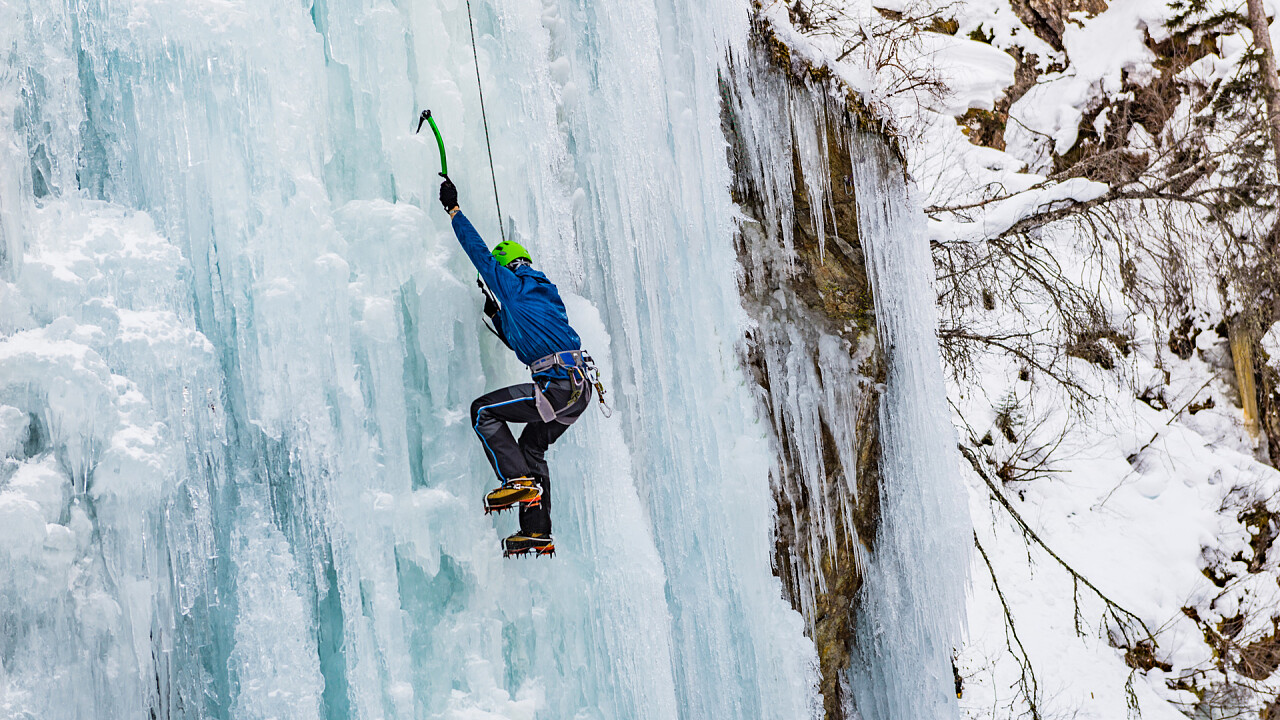
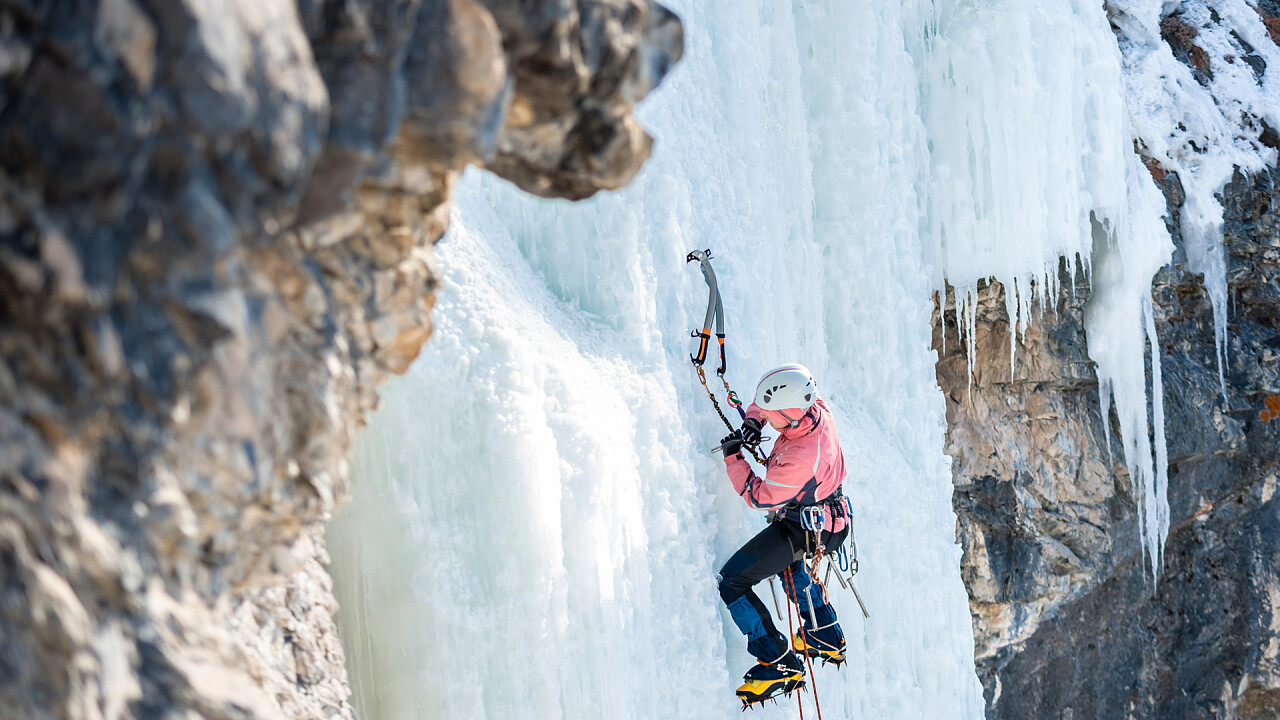
The winter alternative for rock climbing enthusiasts is ice climbing, a mountaineering discipline that is practised on spectacular icefalls, which are climbed not only with normal mountaineering equipment but also with specific ice axes and crampons. It is a discipline that requires a certain amount of preparation, attention and knowledge of the types of ice, the consistency of which varies with weather conditions: the ice can be soft, hard, fragile or resistant.
Acquiring this information is of vital importance if we consider the fact that very often icefalls are without protection and belays and, of course, change from year to year as the wall melts in spring to reform in winter with new shapes and curves. In addition to climbing on natural waterfalls, it is also possible to ice climb on artificial waterfalls, which are often used for courses and workshops. In the last few years, dry toolin, mixed rock and ice climbing, which brings ice climbing closer to bouldering, has also been developing.

Ice Climbing short course
Have you ever experienced the thrill of ice climbing? Would you like to try it for the first time? Or if you have already tried it, would you like to do it again? Here's a two-day course for you to learn the basic techniques for climbing icefalls in a surreal setting like the Dolomites in winter.
Don't waste any more time, find this experience now in the section Vouchers/Experiences
Where to practice ice climbing in the Dolomites
Many areas of the Dolomites offer ice climbing in winter. Among the best known are the "Regina del Lago" and the natural ones in Val Daone, in Val Noana near San Martino di Castrozza, the Cassiopeo in Val Lasties in Val di Fassa, in Valsugana, in Val di Sole, Val di Peio and Val di Rabbi in Trentino; those of Serrai di Sottoguda near Marmolada in Belluno, the artificial waterfall of Corvara in Val Passiria, the natural waterfalls in Valle di Tures, in Solda, in Val Martello, in the Val Venosta holiday area, in Santa Cristina in Val Gardena in Alto Adige.






-tablet.jpg)