 © shutterstock
 © shutterstock
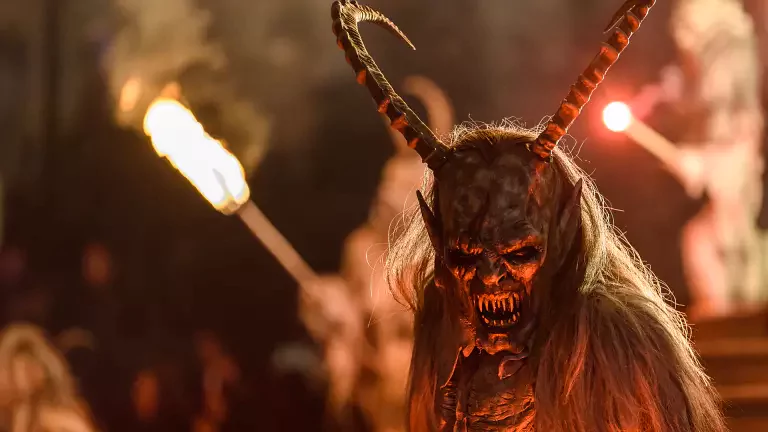
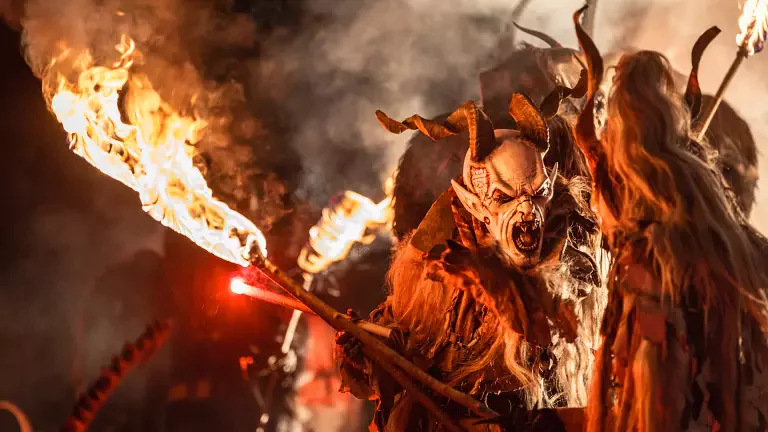
The Krampus parades in the valleys of South Tyrol (Alto Adige), Trentino and in some areas of Friuli‑Venezia Giulia represent a popular ritual that combines folklore, craftsmanship and street theatre. Horned creatures, wrapped in dark furs and accompanied by bells and chains, cross the villages, creating an intense, primordial atmosphere that evokes ancient winter beliefs.
Origins and meaning
According to tradition, the Krampus accompany Saint Nicholas on the evening of December 5th: while the saint rewards well‑behaved children, the Krampus punish the naughty, embodying the ancient tension between the sacred and the profane. The figure of the Krampus arises from the intertwining of pagan rites linked to the forces of winter and the Christian tradition that overlaid these demons with the figure of a saint who rewards virtue. The result is a ritual dualism: reward and punishment, light and shadow, civilization and wild nature.
Masks and craftsmanship
Krampus masks are complex, unique works of craftsmanship. Carved from wood, often fitted with authentic horns and finished with natural fur, they feature details such as sharp teeth, sunken eyes and sculpted wrinkles. Each mask is a singular piece, the result of weeks of work, and for this reason it must not be touched: it is an object of cultural and economic value that embodies the community’s identity.
Where to see them (events not to miss)
Parades take place in various Alpine villages, with events that differ in size and intensity. Notable locations include:
- Dobbiaco (Toblach): a large parade that attracts groups from multiple regions and countries.
- Pozza di Fassa: spectacular parades with strong local participation.
- Vipiteno (Sterzing): The Tuifl parade together with Saint Nicholas, blending Alpine folklore and Christmas spirit.
- Bressanone: The streets of the historic center fill with frightening figures with red tongues, pointed horns, and fur cloaks.
- Campo Tures (Taufers): a centre recognized for mask craftsmanship.
- Castelrotto (Kastelruth): processions that enliven the historic centre with festivities and markets.
- Naturno (Naturns) and Lana: events with routes that cross the town and conclude with convivial moments.
What to expect during the parade
Sounds and scenography: heavy bells, clinking chains, whips and torches create a powerful soundscape and visual setting.
Krampus behaviour: participants may approach the public, stage chases and lightly touch spectators with whips as theatrical gestures; this is not aggression but a ritual performance.
Safety areas: many events provide fenced sections to watch the spectacle safely.
Practical advice
Clothing: wear warm layered clothing, waterproof boots, hat and gloves.
Photography: always ask permission before taking photos; do not touch the masks.
Children: assess young children’s sensitivity; look for “soft” versions of the parades designed for families.
Accommodation and logistics: book in advance for the most popular locations; check parking and shuttle options.
Behaviour: respect local rules and organisers’ instructions.
Food and atmosphere
Christmas markets complete the experience: after the procession, villages come alive with stalls and heated tents offering mulled wine, local spirits and regional specialties. These convivial moments provide a warm contrast to the ritual intensity of the parade.
Krampus parades offer a unique experience: an Alpine rite that stages the relationship between humans and nature, between fear and festivity. Attending means witnessing a living heritage of craftsmanship and tradition, feeling the intensity of winter nights lit by torches, accompanied by the clatter of bells and warmed by the hospitality of mountain villages.