 © Seggiovie Fertazza
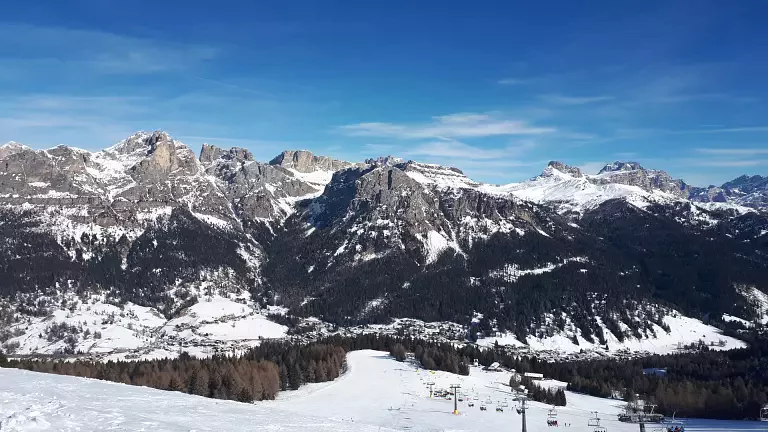
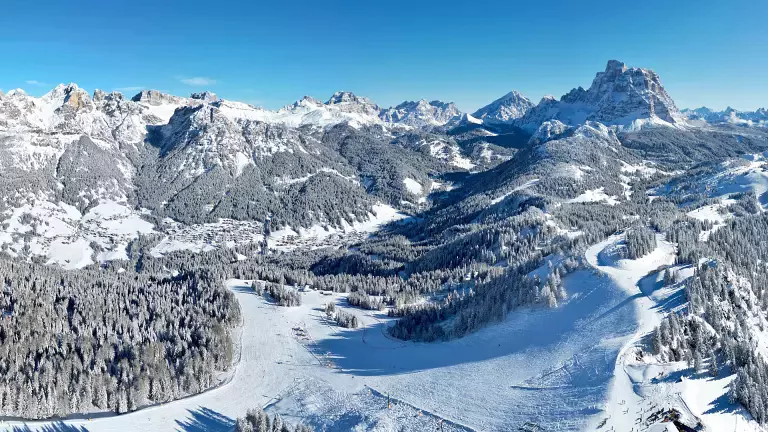
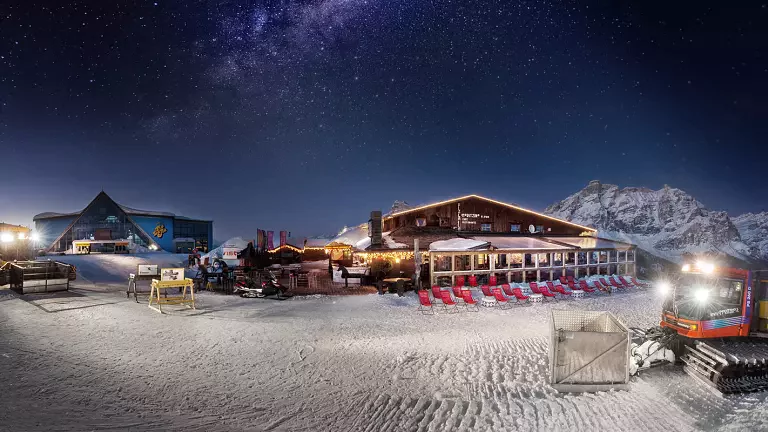
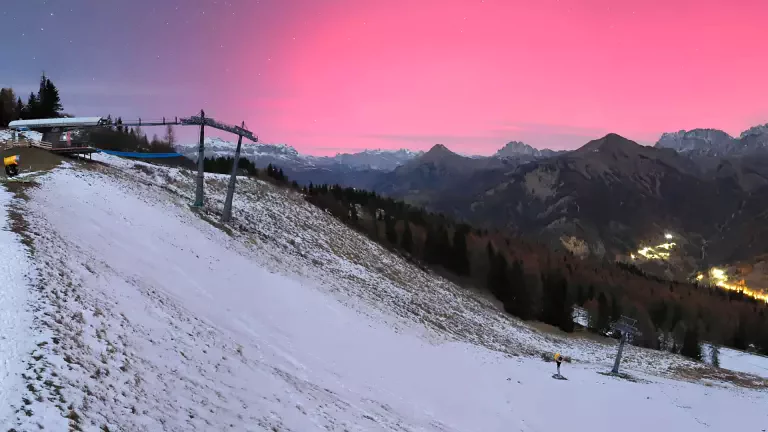
A rare and fascinating spectacle lit up the skies over the Dolomites in the early hours of Tuesday, November 11: an aurora borealis, visible even from northern Italy, was captured at 4:50 a.m. by the Panomax cameras of Seggiovie Fertazza. From the top of Mount Fertazza, with its 360° panoramic view over the Dolomites, the sky glowed in shades of pink and violet, creating an atmosphere of extraordinary beauty.
A rare phenomenon beneath the Dolomite peaks
Seeing the northern lights from the Dolomites is truly an uncommon experience. This spectacle, originating from the Sun and its magnetic activity, is usually visible in the skies of Northern Europe or the polar regions, and only rarely appears over Italy.
The image captured by Seggiovie Fertazza embodies all the magic of the Dolomites, creating an almost surreal scene.
It’s impossible to predict when an aurora will again appear over the Dolomites, but for those lucky enough to witness it — or to admire it through this image — it will remain the memory of a unique dawn, when the mountains became a stage for the power of the Sun and the beauty of our planet.
How an aurora is formed
The polar aurora — known as the aurora borealis in the northern hemisphere and aurora australis in the southern — is a natural phenomenon caused by the interaction between the solar wind and the Earth's magnetic field.
It all begins on the Sun, where intense energy releases streams of particles, mainly electrons and protons, which detach from the solar corona and travel through space as solar winds.
When these particles reach the Earth’s magnetosphere, they collide with the gases in the ionosphere. The atoms, excited by the impact, release energy in the form of light. The color of the aurora depends on the type of gas involved: atomic oxygen in the higher layers produces red hues; molecular oxygen lower down creates the familiar green; and nitrogen, when struck, generates blue and violet shades.
A rare phenomenon, yet one that always reminds us how truly spectacular nature can be — even among the beloved peaks of the Dolomites.