 © Shutterstock
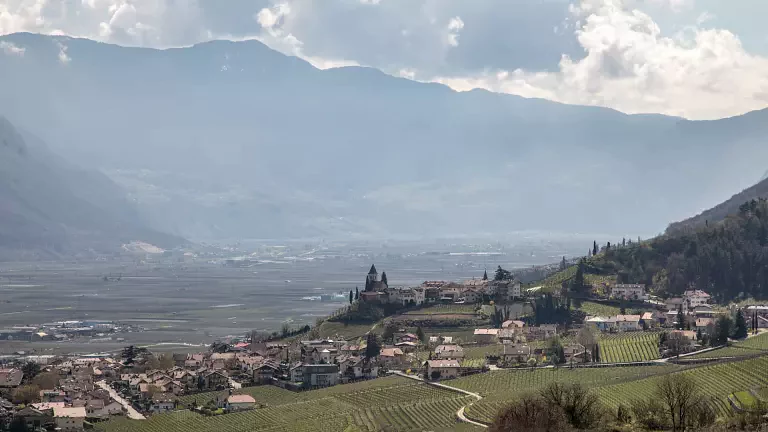
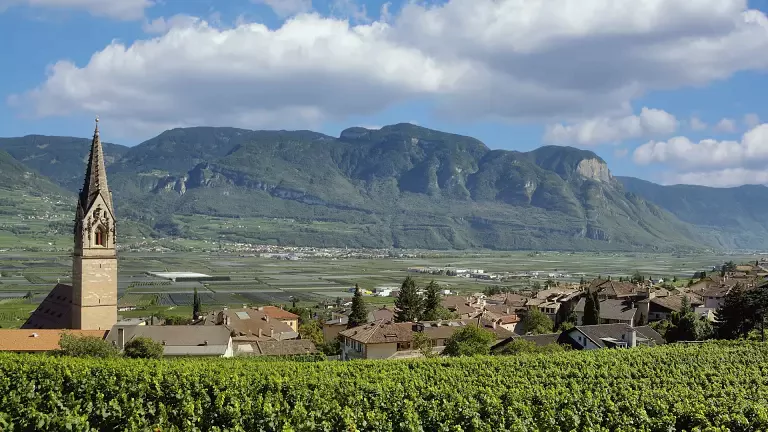
The Egetmann Parade takes place in the village of Termeno, near Bolzano in South Tyrol. It is one of the oldest Carnival processions in the Alpine region, celebrated every two years, only in odd-numbered years, on Shrove Tuesday.
The parade opens with a trumpeter, followed by farmers on horseback with their servants and the Ausschnöller, farmers who crack their whips. Next come the stradini, responsible for keeping the route clear. Behind them marches the rural community, carrying ancient farming tools and accompanying a cart filled with seeds represented by sawdust, hay, and powder.
At the heart of the parade is the iconic Egetmannhansl, a puppet dressed in a black jacket, top hat, and white gloves, carried on a carriage together with his servant. With him travels the bride, traditionally impersonated by a man. According to custom, the bride is not allowed to drink wine, only grappa.
In the final part of the parade appear the councillors and men of authority, dressed in black and carrying symbolic objects such as the protocol register, a ladder, an umbrella, or distinctive candlesticks made from corn cobs. They are followed by the carts of the Old Women’s Mill, the Virgins, and Zenzi, who refuses to become young again. The Old Women’s Mill “grinds” elderly women and returns them young and beautiful.
The Route of the Egetmann Parade
The procession covers about one kilometre, winding through the streets of Termeno and stopping at each fountain. Here, a ladder is placed, the councillor climbs it with his umbrella, and the herald reads the marriage proposal of the Egetmann from the protocol, greeted by loud cheers.
Main Characters of the Egetmann Parade
- Wilder Mann, a fearsome demon
- The hunter, who shoots the Wilder Mann to symbolise the end of winter
- The towering Schnappvieh or Wudele, over two metres tall with moving jaws
- Burgl and Burgltreiber, a mysterious rural couple
- The green bear and the white bear
- Carters, the miller, washerwomen, blacksmiths, threshers
- Witches, rich and poor gypsies, fishermen, the Viking
The Meaning of the Egetmann Parade
The central theme of the parade is the desire to drive away winter and its evil spirits to welcome spring, light, and rebirth.