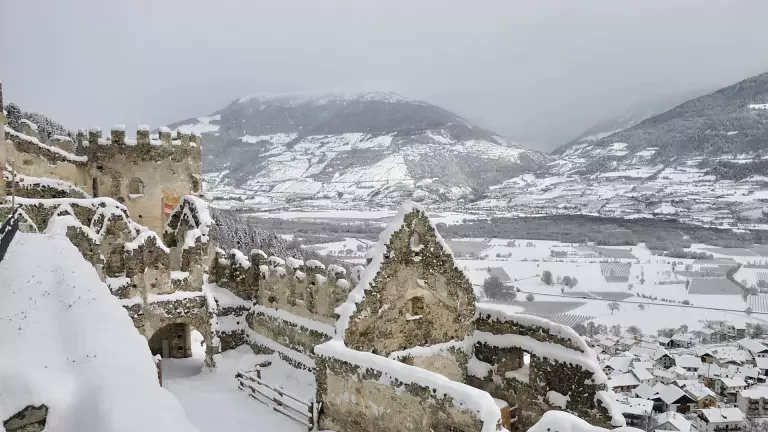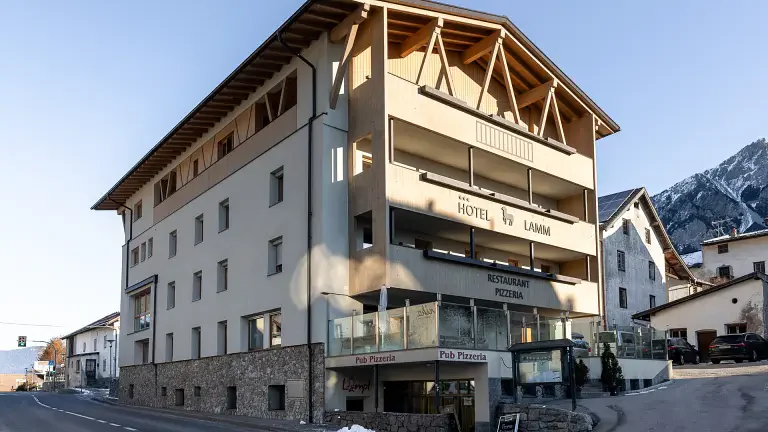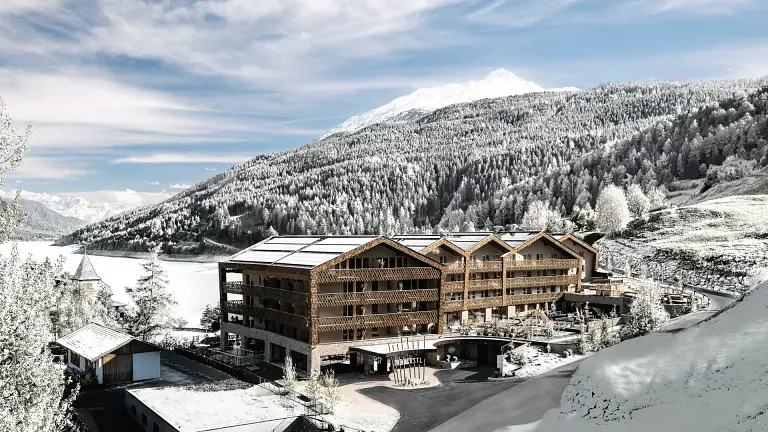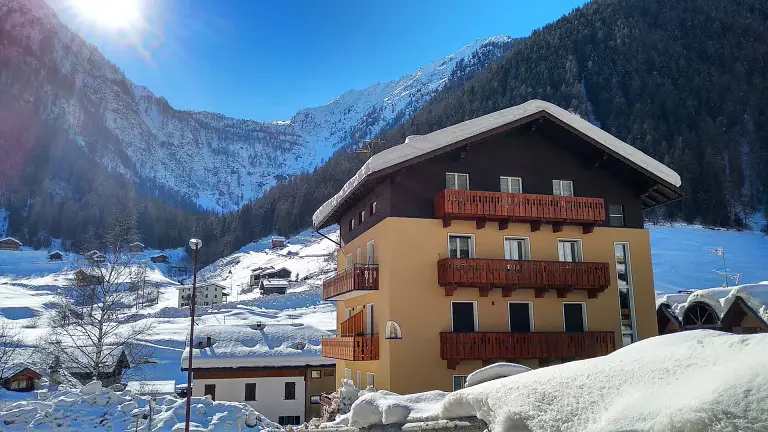
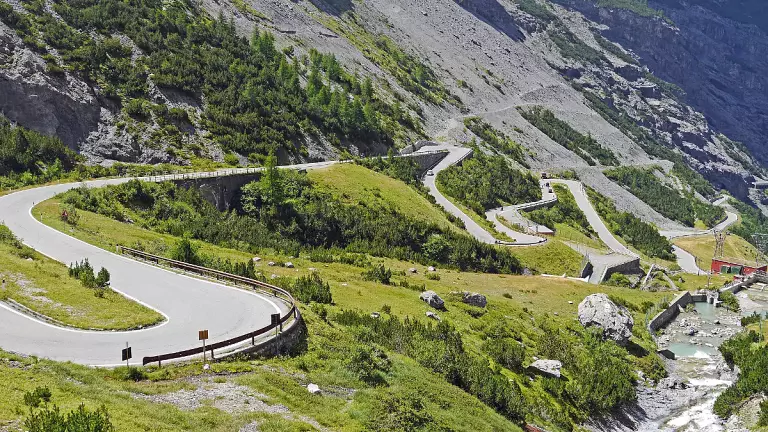
Glaciers, Swiss stone pine forests, marmots, towering peaks and one of the most spectacular roads in the Alps. Stelvio National Park is a concentration of nature and high-mountain landscapes dominated by the Ortler-Cevedale Group.
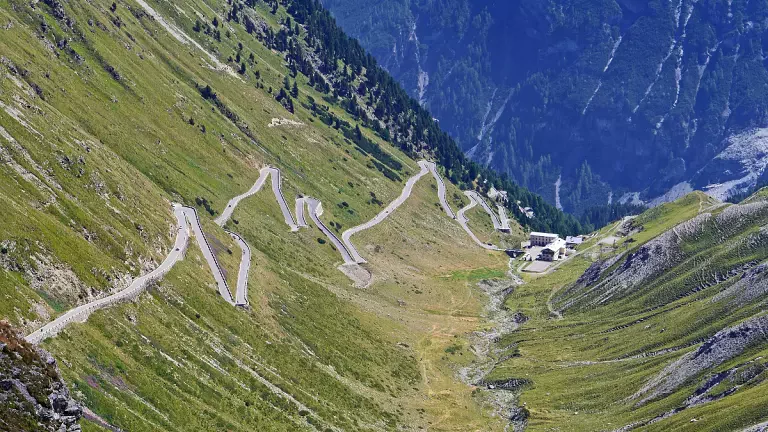
It is a territory to explore on foot, by bicycle or simply by following a legendary road: the Stelvio Pass, which at 2,758 metres and with 48 hairpin bends on the South Tyrolean side is one of the great icons of the Alps.
Where is Stelvio National Park?
Stelvio National Park lies in the heart of the Central Alps, around the Ortler-Cevedale Group. The South Tyrolean section includes large areas of the Venosta Valley, Martell Valley and Ultimo Valley, stretching from the valley floors to the high-altitude glaciers.
It is one of the most important protected areas in the Alps and offers an extraordinary variety of landscapes: meadows and pastures, forests, streams, alpine lakes, rocks, glaciers and imposing peaks.
In South Tyrol, the park encompasses 10 municipalities:
Stelvio, Prato allo Stelvio, Glorenza, Tubre in Val Monastero, Malles, Lasa, Silandro, Martello, Laces and Val d’Ultimo.
Each offers a different gateway to the mountains and reveals a particular side of this fascinating territory.
Ortler-Cevedale: the heart of the park
The landscape is dominated by the Ortler-Cevedale Group, home to some of the most impressive mountains in the Alps.
At 3,905 metres, Ortler is the highest mountain in South Tyrol and one of the symbols of the park. Around its peaks stretch glaciers and valleys shaped over thousands of years by ice and water.
Here, the mountains change rapidly with altitude: forests in the valleys give way to alpine pastures and meadows, followed by bare rock and glaciers at the highest elevations.
Flora: larch and Swiss stone pine forests, alpine flowers
One of the best ways to discover Stelvio National Park is by following its hiking trails.
At lower and medium elevations, Norway spruce forests dominate, while higher up larches and Swiss stone pines become characteristic features of the landscape. The Swiss stone pine is one of the emblematic trees of the alpine environment and can live for centuries.
Above the tree line, the landscape opens into alpine meadows and pastures, where numerous plant species have adapted to the cold and the short alpine summer.
Among rocks and scree slopes, even higher up, some of the most resilient plants in the Alps survive, taking advantage of the brief snow-free season to grow and flower.
Wildlife: marmots, chamois and birds of prey
The park is an ideal habitat for numerous alpine species.
Marmots are among the animals visitors are most likely to spot while hiking, particularly in high-altitude meadows. More difficult to encounter, but present in the area, are chamois and ibex, exceptionally agile on steep rocky slopes.
Red deer and roe deer live in the forests, while the skies are home to large birds of prey such as the golden eagle and the bearded vulture.
For wildlife photographers, Stelvio National Park offers a special opportunity to observe animals in their natural environment, always keeping a respectful distance.
The geology of Stelvio National Park
The mountains of Stelvio tell a geological story that goes back millions of years.
The territory is made up of different types of rock, including sedimentary and metamorphic rocks, which contribute to the remarkable variety of shapes and colours found in the landscape.
A famous example is Lasa marble, quarried in the area around Lasa and Covelano. This prized white marble is known far beyond South Tyrol and has become an important part of the area's history and local economy.
Glaciers have also played a fundamental role: their slow movement has carved the valleys and shaped the landscape we see today.
The Stelvio Pass Road: 48 hairpin bends towards the sky
One of the most spectacular roads in the Alps
If there is one image that represents Stelvio around the world, it is that of its mountain road.
At 2,758 metres, the Stelvio Pass is the highest road pass in Italy. On the South Tyrolean side, the road climbs towards the pass through 48 hairpin bends, in a spectacular succession of curves, rocky walls and ever-changing mountain views.
The road was built between 1820 and 1825 and is still considered one of the great feats of Alpine engineering. Driving along it means travelling through a landscape that changes rapidly: from the forests around Trafoi, the road climbs towards the high mountains, offering spectacular views of peaks and glaciers.
It is a favourite destination for cyclists and motorcyclists, as well as for anyone who wants to experience one of the great panoramic routes in the Alps.
Stelvio by bicycle
For cyclists, conquering Stelvio is almost a rite of passage.
The climb is demanding and the combination of elevation gain and altitude challenges even experienced riders. It is therefore no surprise that the pass has become one of the iconic climbs of the Giro d’Italia.
Every year, the Stelvio Bike Day also offers the chance to experience the pass in a unique way: the road is closed to motorised traffic and reserved for cyclists.
What to see in Stelvio National Park
The park is much more than its famous pass. Among the experiences and places worth discovering are:
- Trafoi and the Three Holy Fountains, at the foot of Ortler;
- Solda, surrounded by some of the most spectacular mountains of the Ortler group;
- Piani Rosim, perfect for admiring high-altitude flora;
- Lackenböden lakes, small mountain lakes surrounded by peaks;
- Lake Covelano, in a panoramic position above the marble quarry;
- Martell Valley, one of the most fascinating valleys in the park;
- Lake Gioveretto, an artificial reservoir surrounded by mountains;
- Ultimo Valley, where nature and Alpine traditions still coexist authentically.
To learn more about the park's natural environment, visitors can also explore its visitor centres, dedicated to geology, wildlife, water and the culture of the valleys around Stelvio.
Hiking, cycling and nature: how to experience the park
The best way to discover Stelvio National Park is to choose the pace that suits you.
Hikers can explore trails through forests, mountain pastures and high-altitude landscapes. Cyclists can take on some of the most famous Alpine passes, while photography enthusiasts will find a landscape that changes constantly with the light and the seasons.
And you do not have to be an experienced athlete: many areas are perfect for a panoramic walk, a family day out or simply stopping to admire the mountains.
When to visit Stelvio National Park
Summer is ideal for hiking, trekking and cycling, when the Alpine passes are accessible and trails lead to mountain pastures and high-altitude environments.
Spring and autumn offer particularly beautiful colours and atmospheres at lower elevations, while winter transforms the valleys into a completely different landscape of snow and silence.
Before setting out, always check trail and high-mountain road conditions: weather can change rapidly at altitude.
A journey into the heart of the Alps
Stelvio National Park is one of those places where the mountains reveal themselves in all their forms: ice and rock, forests and pastures, wildlife and towering peaks.
And then there is Stelvio, with its 48 hairpin bends and breathtaking panorama.
Whether you arrive by bicycle, motorcycle, car or on foot, the journey always leads in the same direction: towards the heart of the Alps and one of the most spectacular landscapes in South Tyrol.