 © Berghotel Sexten
 © Berghotel Sexten
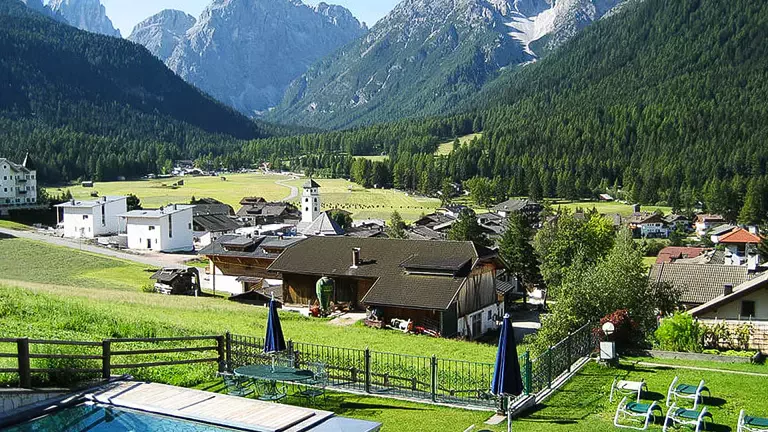 © Berghotel Sexten
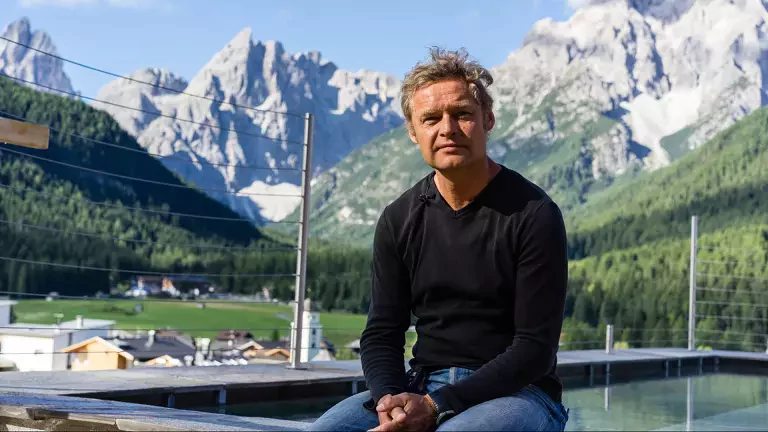
In a discussion dedicated to the future of sustainable tourism in the Dolomites, Lucia Farenzena, CEO of Dolomiti.it, interviewed Walter Holzer, owner of the Berghotel Sexten. The conversation revealed a concrete vision of sustainability, deeply rooted in everyday choices and offering insights into the future of sustainable tourism in the Dolomites.
Sustainability: first you do it, then you talk about it
When asked what sustainability truly means today, Holzer answers without hesitation:
“What matters is doing it, doing it well, and doing it completely. Only then can you talk about it. Less storytelling and more practice.”
At Berghotel Sexten, this approach translates into constant operational choices: careful resource management, waste reduction, and a series of daily decisions involving every area of the hotel, from the kitchen to service management.
But in Holzer’s vision, it all must start outside the company.
The first step is individual behaviour:
“It starts in private life. You must try not to waste, reduce plastic, and become aware of every daily action. Only when this becomes natural in your own life are you ready to bring it into the company.”
It is a path that goes from the individual to the organisation, not the other way around. Sustainability is therefore not a top-down business strategy, but an attitude that originates in personal life and is later transferred into work.
“You have to live it: it’s something you bring from the inside to the outside.”
A view that reinforces one of the key ideas of the interview: sustainability is not first told, it is first built.
Sustainable choices and conscious guests
Some sustainable decisions came at a cost:
“Yes, it cost us some guests who did not return. But they were consumer-type guests, those who always want everything new. And in the end, they are not our target.”
This refers to practices such as not automatically changing bathrobes and linen every day, and a more responsible management of in-room and table services. For example, guests can keep the same cutlery for multiple courses, as at home. Choices that significantly reduce consumption and laundry, but require guest awareness.
When luxury is not abundance
One of the central themes of the interview is the relationship between luxury and sustainability. For Holzer, true luxury is not excess, but conscious quality.
“Less is more. Even in food: less meat, but of higher quality, from well-raised animals.”
This vision challenges the traditional idea of luxury hotels, often associated with abundance, and at Berghotel Sexten it translates into consistent daily choices.
The kitchen works with regional, organic, and fair-trade products, prioritising fresh and seasonal ingredients. Traditional recipes are maintained, while ultra-processed foods are not part of the offering.
Great attention is given to short supply chains: herbs grown on site, vegetables from the summer garden, and water from local springs.
“We try to satisfy all wishes and needs, but without losing our identity.”
An approach that combines cuisine and sustainability, reducing waste and enhancing raw materials, in line with the Slow Food philosophy embraced by the Berghotel.
The risk of sustainability becoming a trend
“The risk is that everyone says they are sustainable, but in reality they are not. It becomes a trend, not an attitude.”
For the Berghotel, sustainability is not a label, but an integrated system involving energy, food, waste management, transport, and even guest behaviour.
Tourism, the Dolomites and sustainability: the risk of overtourism
On the future of the region, Holzer offers a perspective fully aligned with sustainability.
“The biggest risk is that everyone goes to the same places.”
The issue, according to the Berghotel owner, does not concern the Dolomites as a whole, but the concentration of flows in a few hotspots that have gone viral on social media.
“There are four or five places someone discovered on Instagram, and everyone heads there.”
For Holzer, sustainable tourism does not mean reducing numbers, but improving management: distributing, organising, and planning in a structured way.
“These places must be managed professionally. You cannot intervene once the problem has already exploded.”
A logic consistent with his idea of sustainability: anticipating, organising, and reducing imbalances before they impact the territory and the visitor experience.
Sustainability also depends on length of stay
Another key element of the Berghotel’s management philosophy is the duration of stays.
“We still manage to have week-long stays.”
This choice is not only commercial, but also closely linked to consumption and guest behaviour:
“The fewer days people stay, the more they consume. More water, more toilet paper, more food, more letting go and overeating. After two or three days everything settles and returns to a normal rhythm. That is why longer stays are important.”
A reflection that introduces a rarely discussed topic in modern hospitality: time as a variable of sustainability.
Sincerity instead of forced friendliness
One of the distinctive elements of the Berghotel is its relational philosophy:
“We do not want fake friendliness. We prefer authenticity, even if it means being less than ‘perfect’.”
This also shapes team culture: trust, autonomy, and the freedom to make mistakes are fundamental values.
A hotel born from the mountain, not placed on it
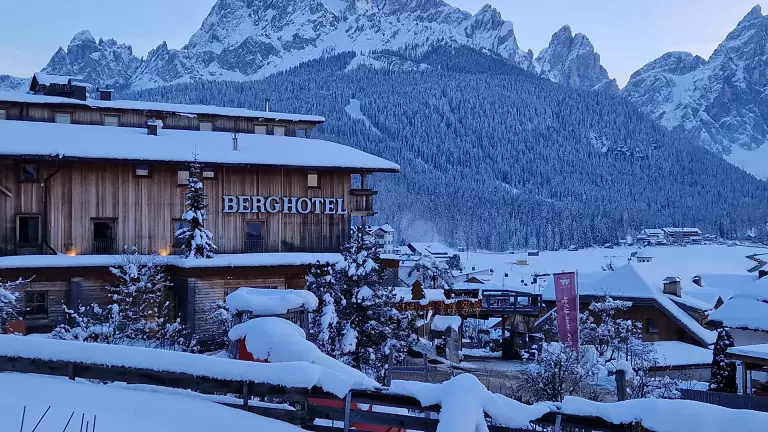
The sustainability of Berghotel Sexten is not only managerial but also structural: natural materials, wood, stone, glass, renewable energy, reduced plastic use, regional cuisine, and short supply chains.
A model that reduces impact without sacrificing comfort, redefining the very concept of alpine luxury.
The future: staying true to the soul
When asked how he imagines the Berghotel in twenty years, Holzer replies without hesitation:
“I hope it keeps its soul. I do not want a structure without identity, identical to all the others.”
A statement that summarises the hotel’s philosophy: resisting the standardisation of hospitality and maintaining a strong identity, even when it means going against the current.
Berghotel Sexten does not propose a perfect model, but a coherent one. Sustainability is not declared, it is practiced. And for this reason, it does not aim to please everyone.
And perhaps this is the phrase that best summarises the entire philosophy of Berghotel Sexten:
“You either live sustainability, or it does not exist.”