 © Associazione Turistica Vipiteno Val di Vizze Campo di Trens
 © Associazione Turistica Vipiteno Val di Vizze Campo di Trens
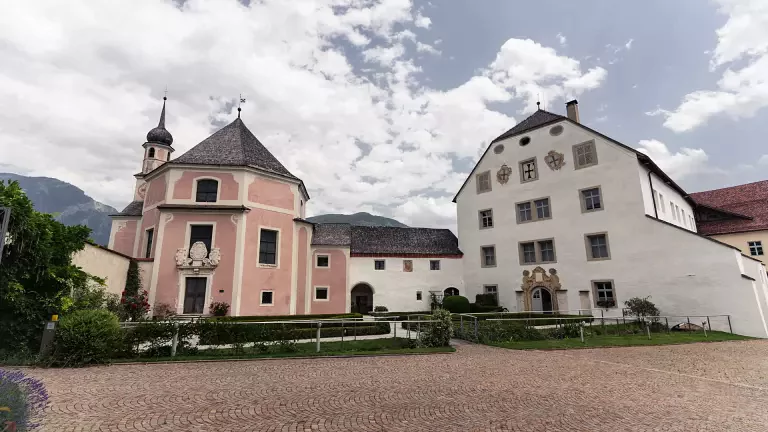
The Civic Museum and Multscher Museum in Vipiteno, located in the historic Deutschhaus (Commenda) near the parish church, offer a journey through the city’s history and Gothic art in South Tyrol. The baroque halls, the late Gothic altar by Hans Multscher, and the legacy of the Teutonic Order make this visit a must for history and art lovers.
History of the Deutschhaus
The Deutschhaus was founded in the 13th century as a hospice of the Teutonic Order, also known as the Order of the Brothers of the House of St. Mary in Jerusalem. In the 19th century, the complex came under the control of the municipality of Vipiteno and became the Civic Hospital, active until 1977. Since 1986, the eastern wing has hosted the Multscher Museum, and since 1994, the complex also houses the Civic Museum of Vipiteno, preserving the city’s history, culture, and art.
Civic Museum of Vipiteno
The baroque halls in the eastern wing house the Civic Museum, showcasing historical maps, documents, testimonies, and local artwork. Murals illustrate the history of the Teutonic Order. Visitors can also admire the Church of St. Elizabeth, dating back to the 18th century, part of the complex.
Multscher Museum
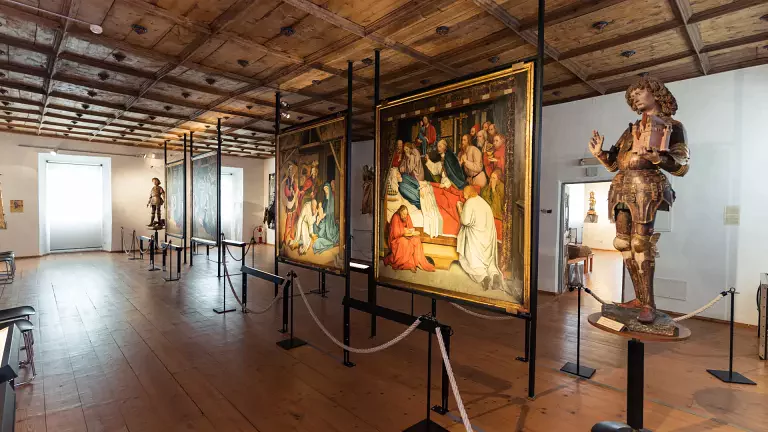
The Multscher Museum is dedicated to the artist Hans Multscher (1400-1467) from Ulm. It displays parts of the late Gothic Multscher altar, created between 1456 and 1459. The four panels depict scenes from the life of Mary and the Passion of Christ, making the altar a masterpiece of Gothic art in South Tyrol.
Practical Information
Address: via della Commenda 11, 39049 Vipiteno, Italy
Phone: +39 0472 766464
Email: museo@vipiteno.eu
Opening hours:
May, September, October: Thursday–Saturday, 10:00–12:30 & 14:00–17:00
July–August: Tuesday–Saturday, 10:00–12:30 & 14:00–17:00
Prices:
Adults: €5.00
Children under 16 & students under 27: €2.50
Free entry for children under 6 and holders of ActiveCard Vipiteno, Colle Isarco, and Racines